Road Test: 2010 Volvo XC60

Before the BMW X3, the Lexus RX pretty much owned the market when it came to luxury compact crossovers, but since 2003 the market has surged with vehicles ranging from Acura, Audi and Cadillac. By 2009, just about every mainstream luxury brand had introduced a compact crossover to the market except for Volvo. Once known for its safety and boxy designs, Volvo has not only introduced a stylish new design language into its vehicles, but it has also emerged into more competitive markets as well, including crossovers. New for 2010, the Volvo XC60 fills the gap between the station wagon-based XC70 and the midsize XC90. First shown as a concept vehicle at the 2007 North American International Auto Show in Detroit, the 2010 Volvo XC60 once again changes the way buyers will look at Volvo vehicles in terms of both styling and safety.

In addition to the Lexus RX and BMW X3, the 2010 XC60 also competes against the Audi Q5, Acura RDX, Cadillac SRX and Lincoln MKX. The 2010 Volvo XC60 is available in two trim levels (3.2 and T6 AWD) with prices starting at $32,395. The model we tested was a XC60 T6 AWD that comes with a starting MSRP of $37,200, but the model we drove was almost fully loaded and came with an as-tested price of $44,240. With a competitive price and a full host of luxury and safety features standard on the all-new XC60, Volvo looks to be making up for lost ground when it comes to taking on this vehicle segment.

2010 Volvo XC60 Exterior

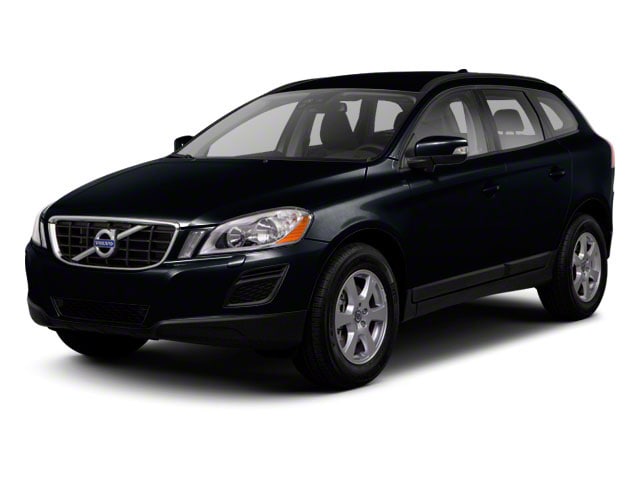
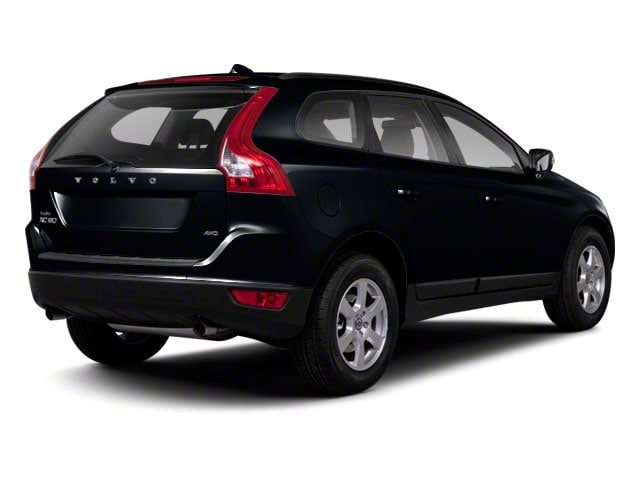
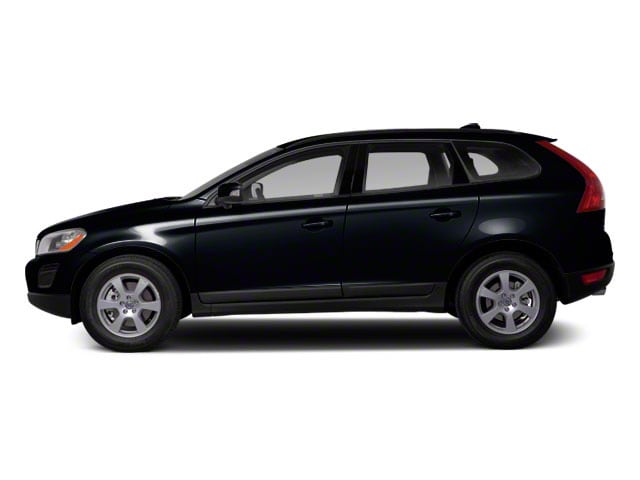
To distance its latest crossover from the larger and lower-priced XC70, Volvo gave the XC60 one of the most stylish designs to grace a Volvo to date. Every aspect of the XC60's design is aimed to either add Volvo character styling or improve safety, and in some cases both. Some of the best aspects of current Volvo designs are incorporated into the XC60's wedge-shape styling including the trapezoidal front grille with an enlarged Volvo logo, the broad, curved shoulders running the length of the body and the pear-shaped rear end with tall LED taillights. The wide, sporty stance of the XC60 is also magnified by the rising beltline, sloped roofline and steeply raked D-pillar. Like other Volvo XC vehicles, the lower edges of the XC60 are wrapped in matte black plastic to prevent damage during off-road maneuvers. Our test vehicle came in what appears to be the XC60's iconic hue, Terra Bronze Metallic, and a stylish set of 18-inch, six twin-spoke alloy wheels with XC engravings.

2010 Volvo XC60 Interior

Resembling a home furnished by IKEA and Best Buy, the cabin of the fully loaded XC60 T6 AWD we tested offered stylish two-tone leather seats with a lightly colored wood inlay on the waterfall center stack and enough technology (both standard and optional) to justify its mid-$40,000 price tag. To further display the cross country (XC) nature of the XC60, the front and rear seats are trimmed in what Volvo refers to an X-theme which essentially covers the seats with dark leather that is contrasted by lightly colored leather in an 'X' pattern. Those familiar with Volvo vehicles will appreciate the classic styling, but those who are new to Volvos will also be able to appreciate the luxurious accommodations. To complete the unique ambiance inside the XC60 T6 AWD, Volvo is offering all models with an introductory no-charge panoramic sunroof - a savings of $1,200.

The XC60 we tested came practically fully loaded thanks to a pair of costly packages. The Multimedia Package ($2,700) adds the Dynaudio premium sounds system with Dolby Pro Logic II surround sound, a rearview camera with trajectory lines and a navigation system with real-time traffic. For added safety, our XC60 also came equipped with the Climate, Child Seats and Technology Package ($2,695) that offered a broad array of safety and comfort devices such as rain-sensing windshield wipers, second-row outboard integrated child booster seats, and a number of automated systems that will be broken down along with other XC60 safety devices shortly.

One aspect of the cabin that we found odd was the placement of the navigation controls on the back of the steering wheel, but we appreciated the lack of a pop-up navigation display. On vehicles such as the S80 sedan, the display is hidden in the top of the instrument panel and then pops up when in use. The two-button control and joystick mounted on the back side of the steering wheel is within an easy reach of the driver's right hand, but the blind placement of the controls require memorization to operate. As an alternative to the steering wheel controls, Volvo also offers a remote control for the navigation system that hides easily in one of the XC60's many storage compartments or cubby holes. When it comes to storage, the XC60 is ready for any task as it can hold up to 30.8 cubic feet of cargo with the rear seats in place or 67.4 cubic feet with the 40/20/40 bench folded flat. For longer items, the passenger front seat is able to fold completely flat.

2010 Volvo XC60 Performance & Handling

Although a less powerful engine is available in the XC60 3.2, we were able to test Volvo's proven 3.0-liter turbocharged inline-6 that is used in many of its midsize and full-size vehicles. Both engines available in the XC60 are inline six-cylinders, but the 2010 XC60 T6 AWD gains a few more ponies and torque courtesy of a turbocharger. The good news is that this engine produces 281 horsepower and a generous torque plateau that delivers the full 295 lb-ft of torque from 1,500 rpm up to 4,800 rpm. The bad news, however, is that combining this peppy engine to the Haldex all-wheel drive system makes for some unimpressive fuel economy numbers with EPA estimates of 16 miles per gallon in the city and 22 mpg on the highway (the XC60 3.2 gets 18 mpg city/27 mpg highway).

Despite the T6's fuel economy, the XC60 manages to offer one thing that neither of the other XC Volvos offers - a fun driving dynamic. Not to imply that the XC70 or XC90 are boring cars, but the compact size of the XC60 and its turbocharged, all-wheel drive layout add up to a vehicle that offers quick acceleration, nimble handling and precise steering. While we were unable to backup Volvo's claim of the XC60 running from 0-60 miles per hour in 7.1 seconds, the 4,174-pound crossover exhibited surprising acceleration and performance.

2010 Volvo XC60 Safety

The all-new XC60 has yet to be tested by either the National Highway Traffic Safety Administration (NHTSA) or the Insurance Institute for Highway Safety (IIHS), but it is sure to score pretty high thanks to a large number of standard and optional safety features. In addition to standard safety features such as a full complement of airbags, dynamic stability control, roll stability control and Volvo's whiplash protection system (WHIIPS) for front occupants, the XC60 offers numerous advanced optional safety systems. As part of the Technology Package, the 2010 XC60 offers Adaptive Cruise Control, Lane Departure Warning, Collision Warning with Auto Brake and Driver Alert Control. Driver Alert Control monitors the driver's steering wheel input and determines the alertness of the driver. If the system detects extensive swerving, it will assume the driver is drowsy or not paying attention and will alert the driver with an audible chime and on the display. The only safety device our vehicle was not equipped with was Volvo's Blind Spot Information System.

Fitting for a Volvo, one of the XC60's trick features isn't in its design or drivetrain but rather its safety. Standard on the 2010 XC60 T6 AWD is Volvo's all-new City Safety System that is designed to eliminate or reduce the impact of low-speed rear-end collisions up to speeds of 19 mph. Testing such a feature might seem rather dangerous in real-world conditions, so Volvo also lent us some plastic barricades to show off the stopping abilities of the City Safety System. At 10 mph, City Safety is able to bring the XC60 to a complete stop about a foot away from the barriers. At 17 mph, the system worked to slow the XC60's speed, but contact is still possible. On a couple occasions, the XC60 did make contact with the barriers, but to put this into context, instead of hitting a stopped car at 17 mph, we would have hit it at a safer and more manageable 1-2 mph. For a demonstration of Volvo's City Safety System, please watch the video(s) below.

Summary

The 2010 Volvo XC60 represents the pinnacle of both vehicle design and safety for the Ford-owned Swedish automaker. With a modern, muscular design, a detailed interior and the advanced safety of Volvo's all-new City Safety System, the all-new XC60 should help Volvo successfully enter yet another vehicle segment and compete quite well among luxury compact crossovers.


2010 Volvo XC60 City Safety System demonstration @ 17 mph


2010 Volvo XC60 City Safety System demonstration @ 10 mph