The Nissan GT-R is here. So why all the fuss?
Introduction
Introduction
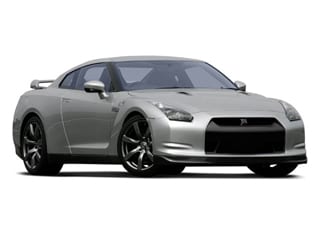
2009 Nissan GT-R: GT-R. You have probably heard this three letter combination recently. Maybe, you know it’s the name of a car. Maybe you even know it’s a new high-performance Nissan sports car. You see the comparisons: This is Nissan’s Corvette Z06, its 911 Turbo, its M6 its...well, you get the picture. Yet despite all the hype, all the breathless prose that accompanies this car’s every move, and the magazine covers proclaiming that Godzilla has invaded the U.S., there’s a pretty good chance you’re wondering: What the heck is the Nissan GT-R, and why is everyone making such a big deal about it?
By Keith Buglewicz
Photo credit: Nissan
Why it Matters
Since 1970, the top-dog sports car in the Nissan (then Datsun) lineup has been the Z. 240, 260, 280...Z, ZX, ZX Turbo...it’s reigned for nearly four decades as the quintessential Nissan sports car. However, we were wrong. The Z was an adjunct, created almost exclusively for the U.S. market and the brainchild of the first maverick president of Nissan’s North American operations, Yutaka Katayama. Yet the Z was the second son of the company’s sports cars, relegated forever to a lower status because another car, developed in Japan and for the Japanese market, was first: The Skyline.
Why it Matters
The story of Katayama’s sports car and the conflict it caused within the company is a great one...for another time. Instead, we’re concentrating on Nissan’s king of the hill here, the GT-R. It evolved from humble beginnings, true, but through the years the Skyline GT-R – now just the GT-R – has proven itself to any doubters that it is the equal to any sports car on the face of the planet. Porsche 911? It’s faster. Corvette? Nope, can’t beat it. Pick your champion, and the GT-R vanquishes it like Godzilla smacking Mothra right out of the sky.
Why it Matters
The modern formula for the GT-R is simple: All-wheel drive, a 3.8-liter twin-turbo V-6 with 480 horsepower, a twin-clutch automatic manual transmission, and enough integrated electronics to give Apple a lesson or two. Still loosely based on the Skyline – which we know as the Infiniti G Series – it has been radically altered for maximum performance. Yet despite its world-beating capability, most Americans don’t know much about the GT-R because its predecessors were largely Japan-only. Now that it’s coming here, we have the story on its origins, how it earned its reputation, and why this new car is as significant as they come.
1957 Prince Skyline
For many, discovering the Skyline is a 50-year-old nameplate is likely less surprising than finding Nissan even existed back then. The company itself goes back to the early 1900s, but that’s another story for another time. While Elvis was dancin’ the Jailhouse Rock, the original Skyline rolled off assembly lines with a 60 horsepower 1.5-liter four-cylinder engine and styling that looked for all the world like a shrunken Ford sedan. It approximates the performance of today’s GT-R no more than a ’53 Corvette with a Blue Flame six-cylinder does a new Corvette, but everything has its beginnings, so show some respect.
1962 Prince Skyline Sport by Michelotti
By 1962, this special edition of the Skyline was produced by Italian designer Michelotti. Closely resembling the 1961 Chrysler New Yorker, particularly the slanted headlight design, the Sport model was available in coupe and convertible forms, and was powered by a 1.9-liter 94 hp four cylinder engine. While the design was highly regarded – and that kind of power from a four-banger in the early 60s was pretty darn good – the car was expensive to produce, and was subsequently dropped. Still, one could argue that as the first sporty Skyline, this is the spiritual ancestor to today’s GT-R...but we admit that’s a stretch.
1965 Skyline 2000GT-A
By 1963, the Skyline had evolved into its second generation. The styling was the usual array of 60s design themes, but one important element made it to the vehicle: round taillights. They’ve been there ever since, including the new GT-R. This was also the generation where the Skyline went racing: A Skyline GT-B with a 2.0-liter, 125 horsepower engine and a close-ratio five-speed manual transmission (a variation of the 2000GT-A shown here) came in second to a Porsche 904GTS in the 1964 Grand Prix of Japan. Not a bad showing for a four-door sedan.
1969 Skyline 2000GT-R
Here it is: The very first Skyline GT-R. Introduced in February of 1969, the Skyline 2000GT-R boasted a 2.0-liter inline six cylinder engine producing 160 horsepower, as much as a contemporary Porsche 911. The 2000GT-R was pure race: No heater or radio were included, keeping weight down. In 1971 a coupe version was introduced. With a shorter wheelbase and even less weight, the coupe was more maneuverable than the sedan version, allowing it to cement its racing credentials, with 50 victories between the sedan and coupe by the time the car went out of production in 1972.
1972 Skyline 2000GT-R
In 1972 a new Skyline debuted, with a new 2000GT-R version in the lineup. Powered by the same 160 horsepower engine, the new GT-R was not entered into racing, at least not from the factory. The impending fuel crisis limited production to less than 200 units, and ultimately the GT-R disappeared from the lineup for 15 years.
1980 Skyline GT-ES
As the 70s progressed into the 80s and fuel economy and emissions regulations began to take hold, the Skyline evolved. The GT-R was gone, eventually replaced at the top of the line by the GT-ES. This model debuted in 1980, and brought something new to the Skyline that has remained a staple of the top-performance model ever since: Turbocharging. Its 2.0-liter six-cylinder engine produced 140 horsepower, which was down from the older model’s, but it met emissions regulations, and the turbo engine opened up a world of aftermarket tuning possibilities.
1983 Skyline RS-X (R30)
The 1983 model year did not see the return of the GT-R. However, with the Skyline RS-X boasting 205 horsepower from a turbocharged and intercooled four cylinder engine, it was clear that performance was again an important part of the Skyline makeup. The sleek coupe was the performance bellwether for the line, and for the Nissan brand as a whole. It also reversed the trend of ever-heavier Skylines, endearing it to enthusiasts who had watched sadly as their favorite car gained weight and lost its edge over the preceding years. This is also when Nissan began using the “R3X” code to designate each Skyline generation; this was the R30.
1987 Skyline GTS-R (R31)
The R31 Skyline debuted as a 1985.5 model year car, initially only as a sedan, and a cushy luxury one at that. Enthusiasts had to wait until mid-year 1986 before a performance coupe was introduced, but the wait was worth it. The entire line was powered by a new engine family, the RB20, and the GTS coupe got a turbocharged version that produced 190 horsepower. Beyond the engine, another feature was added to the Skyline that has since become a staple: HICAS, which was Nissan’s four-wheel active steering system. In 1987, Nissan introduced a racing version of the Skyline, the GTS-R, producing 210 horsepower and equipped with a sport-tuned suspension.
1989 Skyline GT-R (R32)
Meet Godzilla: the name bestowed upon the 1989 Skyline GT-R. This was the car that showed that Nissan was ready to take on the world’s greatest sports cars. It boasted a number of advancements, such as all-wheel drive, improved four-wheel steering and a 2.6-liter twin-turbocharged inline-six producing 280 horsepower. At least, that was the stated horsepower; the reality is that it likely made more than that, considering that its 0-60 time was less than 5 seconds. The car dominated the Japanese Group A racing class, literally winning all of the 29 races during the season, and ultimately killing the series.
1995 Skyline GT-R (R33)
Talk about big shoes to fill. The R33 Skyline GT-R had to surpass the abilities of the R32, a car that reestablished the whole line as Japan’s one true supercar. In 1995, the new GT-R was unveiled, with a shape that resembled its predecessor enough that it was instantly recognizable. Powered by the same six-cylinder engine retuned for more torque, it also had more weight and an increased emphasis on ride quality and luxury. As a result, performance suffered slightly compared to its hard-nosed predecessor, but the car was still incredibly fast, handled incredibly well, and was tough to beat under any circumstances.
1999 Skyline GT-R (R34)
Although the R33 was an excellent car in its own right, some thought that the added weight and luxury touches detracted from the sporty character. Thus, the R34 that debuted in 1999 offered up better handling, more power and was shorter overall than the previous model. Various racing versions made more than 400 horsepower, and the car took the record for the fastest time for a production car around the famous Nürburgring racetrack in Germany. This was also the last time the GT-R would be part of the Skyline family. We know the Skyline sedan and coupe as the Infiniti G35, but destiny had other plans for the GT-R.
2009 GT-R (R35)
Imagine the Porsche 911 had been a Europe-only treat for the past 40-plus years. That’s how big a deal the 2009 Nissan GT-R is. Nissan used the Porsche 911 Turbo as a benchmark, and beat it: 480 horsepower, 0-60 mph in about 3.5 seconds, the quarter mile in about 11.5 seconds, and a top speed just under 200 mph. The GT-R currently holds the unofficial record for production cars at the Nürburgring: 7 minutes and 29 seconds. It’s the most sophisticated, highest performing and most capable sports car Nissan has ever produced, hell, that anyone has ever produced.
Oh, it has a sticker price of less than $70,000. Now, do you understand the excitement?
_64_thb.jpg)
_64_thb.jpg)
_64_thb.jpg)
_64_thb.jpg)
_64_thb.jpg)
_64_thb.jpg)
_64_thb.jpg)
_64_thb.jpg)
_64_thb.jpg)
_64_thb.jpg)
_64_thb.jpg)
_64_thb.jpg)
_64_thb.jpg)
_64_thb.jpg)
_64_thb.jpg)
_64_thb.jpg)