When it comes to hot hatchbacks, there’s always been an 800-pound
gorilla in the room. Actually, it’s more of a 3,100-pound gorilla.
We’re referring of course, to the beloved Volkswagen GTI. Since the
original Rabbit GTI hit the states in 1983, it has been the benchmark
hot hatch. Over the years, challengers have come and gone, but few have
offered the price-performance punch of the Mazdaspeed3. When it debuted
in 2006, this five-door hatch wasn’t hot; it was scalding—a 263-hp
turbocharged hellion that instantly won over enthusiasts with its
visceral appeal and sub-$25,000 sticker. Billed as “all new,” the 2010
Mazdaspeed3 is actually significantly refreshed. Besides its very
obvious facelift (smile!), this fiery five-door is also more
well-mannered. But has this maturity dulled its bratty charm?
Page 2#10. It’s still born and bred from serious motor sports
Mazda’s “Zoom-Zoom” tagline isn’t just marketing gold; it’s corporate culture. From amateur autocross and kart racing to partnerships with the Skip Barber school and a presence in the American Le Mans Series, Mazda is serious about racing. (Only Porsche has more professional road racing wins to its name.) In 2003, Mazda began seriously funneling racetrack R&D to streetcars through its Mazdaspeed division. The 2010 Mazdaspeed3 represents the pinnacle of a line of turbocharged street rockets from the company’s in-house performance arm.
Page 2#9. Okay, what’s with the goofy grin?
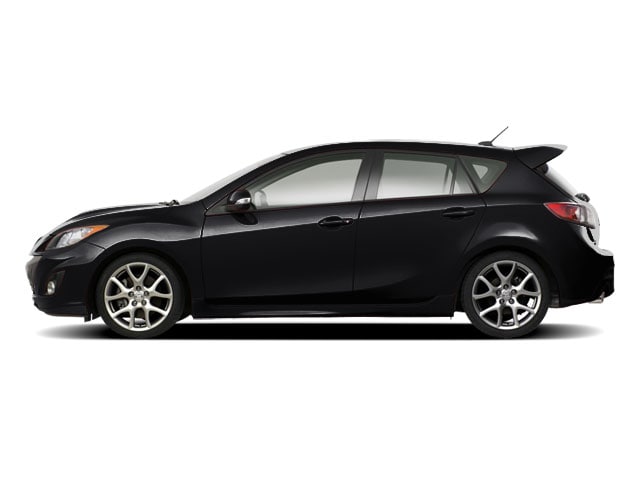
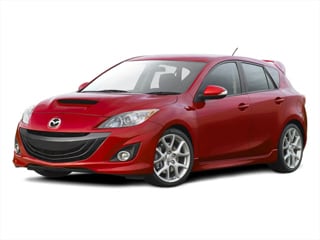
Blame it on “Nagare,” Mazda-speak for the company’s new surface design language, which debuted at the 2006 Los Angeles International Auto Show via a radical concept car by the same name. The all-new sheetmetal wrapping the entire 2010 Mazda3 lineup is very Nagare: sculpted surfaces, swooping lines and yes, cartoonish facial features. Exterior elements unique to the Speed3 include new 18-inch alloy wheels, sculpted side skirts, an enlarged rear wing, and a lower front air dam. The original Speed3 was the quintessential wolf in sheep’s clothing. The 2010 Speed3 is a wolf in a DayGlo mink. It’s a radar-happy highway patrol officer’s dream.
Page 2#8. And how about all the buttons?
The Speed3 cabin is classy and sporty, with its black-and-red motif (including contrast stitching), electroluminescent gauges and leather-wrapped wheel and shifter. The front sport seats are supportive, though we wouldn’t mind some adjustability in the bolstering department. Then there are all the buttons: 17 of them on the steering wheel alone—that includes three different toggles, one of which is the sole access point for the optional navigation system (more on that later). The biggest button of them all—a silver, puck-sized doodad smack in the middle of the center stack—is only good for audio tuning? A cleaner, simpler multi-function interface would be a godsend.
Page 2#7. The engine technology is five years old—and getting better with age
Developed in 2005 for the first-generation Speed3, Mazda’s MZR 2.3-litre Direct Injection Spark Ignition (DISI) turbocharged powerplant won plaudits for delivering V6 performance with four-pot thrift. From behind the wheel, the engine’s 263 horses and 280 lb-ft. of torque translated to staggering acceleration though unfortunately, awkward gearing accentuated the turbo lag. The 2010 Speed3 features the same engine and output numbers—but with very different results. Taller gearing in second through fifth has ironed out all the torquey blasts for a more consistent and linear power delivery.
Page 2#6. The new Mazdaspeed3 steers clear of old pitfalls
As Mazda likes to point out, the monstrous output of the original Speed3 made it the most powerful front-drive performance car in its class. All that juice to the front rubber also meant horrific torque steer. There was some talk of all-wheel drive, but Mazda engineers instead opted to recalibrate the car’s torque management system, which tempers output based on gear position and steering angle. Though we were skeptical at first, the system really does reign in the Speed3’s performance-tire-spinning potential without ruining the fun. A new electro-hydraulic power steering system has significantly tightened up high-speed steering feel and response.
Page 2#5. Mazda sticks with a traditional tranny
In the age of DSG, PDK and other slick-shifting automated manual transmissions, the clutch pedal is going the way of the dodo. Thankfully, Mazda plays to the purists by offering the Speed3 with only a traditional six-speed manual transmission. The leather-wrapped shifter is perfectly situated for precise, short throws in conjunction with the nicely weighted clutch. (On a related note: the throttle could be heavier, but brake feel is spot on.) Rowing through the gears on the Speed3 is a bittersweet reminder of the disappearing joy of driving stick.
Page 2#4. Now with less lower-back pain!
When the roads turned rough, the previous Mazdaspeed3 answered with some kidney-punching action. Mazda responded by using thicker sheet metal and more advanced welding and adhesives to increase torsional stiffness, allowing for a completely retuned suspension. Stiffer springs and higher damping rates result in a firmer ride that somehow manages to keep the Speed3 driver completely comfortable in around-town conditions, and in constant communication with the asphalt when things get interesting.
Page 2#3. Less really is more
With its knockout price-performance punch, the first Mazdaspeed3 was a star—not that Mazda engineers didn’t consider shooting for the moon with the followup. In addition to the aforementioned possibility of all-wheel-drive, there was talk of boosting horsepower to a frightening 300 ponies. Would we get behind the wheel of a 300-hp, all-wheel-drive Speed3? Um, yeah—faster than you can say “Zoom-zoom.” But would it be a better car? Not necessarily. And it would definitely be a much pricier car. Instead, Mazda went for some seriously impactful tweaks that boosted the MSRP a mere $455 over the outgoing model to a very livable $23,945.
Page 2#2. So, what do I get for my money?
Well, in Mazda’s own words, you get “everything you want, nothing you don’t need.” The Speed3’s lengthy standard equipment list includes Bluetooth hands-free phone/audio, halogen headlights and fog lamps, electroluminescent gauges, aluminum pedals and dual-zone climate control. The only options come bundled in a $1,895 Tech Package. You may want—and need—its 10-speaker Bose surround-sound audio system to drown out the road noise at freeway speeds. And using the “compact” full-color navigation system tucked in a corner high atop the center stack is like trying to read a postage stamp… on the bumper of the car in front of you. It works, but you really have to work for it.
Page 2#1. There’s a fine line between refined and boring
Now entering its fifth model year, the Mazdaspeed3 has clearly carved out its niche in the hot hatch segment. Still, it’s impossible to ignore that 3,100-pound gorilla—especially since the Speed3 seems purpose-built as a counterpoint to the beloved Vee Dub. With the GTI becoming increasingly refined, the original Speed3 was a refreshing return to rawness: explosive, engaging and often unwieldy. The rough edges were what set it apart from the pack. Mazda could have easily sanded them all down, and some may argue that they should. Instead, Mazda sharpened them all to an even finer point. We couldn’t be happier.