
Recent Articles
Popular Makes
Body Types
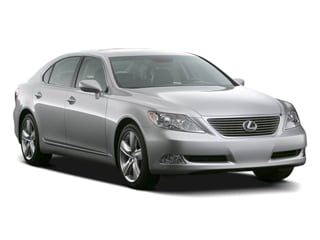
2009 Lexus LS 460
Get Pricing$63,825 - $77,260 Starting MSRP
Model Highlights
Fuel Economy
18 MPG Comb.
Body Type
Sedan
Transmission
Automatic w/OD
Seatings
5 Seats
`
Get a New Car Quote
Overview
Whether in standard-length (LS 460) or long-wheelbase (LS 460 L) form, the LS 460 is powered by a 357-horsepower, 4.6-liter V8, fitted to an 8-speed automatic transmission. The V8 has sophisticated technology including electrically operated...

Looking for alternatives to the Lexus LS 460?
Start Comparing NowSpecs
Mileage
Fuel Economy Est-Combined (MPG): 18
EPA Fuel Economy Est - City (MPG): 16
EPA Fuel Economy Est - Hwy (MPG): 23
Electrical
Cold Cranking Amps @ 0° F (Primary): - TBD -
Maximum Alternator Capacity (amps): - TBD -
Cooling System
Total Cooling System Capacity (qts): - TBD -
Weight Information
Base Curb Weight (lbs): 4332
Trailering
Dead Weight Hitch - Max Trailer Wt. (lbs):
Dead Weight Hitch - Max Tongue Wt. (lbs):
Wt Distributing Hitch - Max Trailer Wt. (lbs):
Wt Distributing Hitch - Max Tongue Wt. (lbs):
Suspension
Suspension Type - Front: Multi-Link
Suspension Type - Rear: Multi-Link
Suspension Type - Front (Cont.):
Suspension Type - Rear (Cont.):
Shock Absorber Diameter - Front (mm): - TBD -
Shock Absorber Diameter - Rear (mm): - TBD -
Stabilizer Bar Diameter - Front (in): - TBD -
Stabilizer Bar Diameter - Rear (in): - TBD -
Brakes
Brake Type: Pwr
Brake ABS System: 4-Wheel
Disc - Front (Yes or ): Yes
Disc - Rear (Yes or ): Yes
Front Brake Rotor Diam x Thickness (in): 13.1 x - TBD -
Rear Brake Rotor Diam x Thickness (in): 12.4 x - TBD -
Drum - Rear (Yes or ):
Rear Drum Diam x Width (in):
Tires
Front Tire Order Code:
Rear Tire Order Code:
Spare Tire Order Code:
Front Tire Size: P235/50VR18
Rear Tire Size: P235/50VR18
Spare Tire Size: P235/50R18
Wheels
Front Wheel Size (in): 18 x 7.5
Rear Wheel Size (in): 18 x 7.5
Spare Wheel Size (in): 18 x 7.5
Front Wheel Material: Aluminum
Rear Wheel Material: Aluminum
Spare Wheel Material: Aluminum
Steering
Steering Type: Pwr Rack & Pinion
Steering Ratio (:1), Overall: 11.6-16.6
Lock to Lock Turns (Steering): 3.2
Turning Diameter - Curb to Curb (ft): 36.8
Turning Diameter - Wall to Wall (ft): - TBD -
Fuel Tank
Fuel Tank Capacity, Approx (gal): 22.2
Exterior Dimensions
Wheelbase (in): 121.7
Length, Overall (in): 202.8
Width, Max w/o mirrors (in): 73.8
Height, Overall (in): 58.1
Track Width, Front (in): 63.5
Track Width, Rear (in): 63.7
Min Ground Clearance (in): 6.1
Liftover Height (in): - TBD -
Cargo Area Dimensions
Trunk Volume (ft³): 18.0
Interior Dimensions
Passenger Capacity: 5
Passenger Volume (ft³): 103.0
Front Head Room (in): 38.0
Front Leg Room (in): - TBD -
Front Shoulder Room (in): 58.5
Front Hip Room (in): 55.4
Second Head Room (in): 38.0
Second Leg Room (in): - TBD -
Second Shoulder Room (in): 56.4
Second Hip Room (in): 55.5
Summary
Vehicle Name: Lexus LS 460
Body Style: 4-Door Sedan
Emissions
EPA Greenhouse Gas Score: 4
Pricing
This model has 4 different trims.
| MSRP | $77,260 |
|---|---|
| Invoice | $68,760 |
| Description | 4.6L/281, 380 @ 6400, Automatic w/OD |
Fuel Economy
This model has 4 different trims.
| City | 16 MPG |
|---|---|
| Hwy | 23 MPG |
| Combined | 18 MPG |
| Description | 4.6L/281, 380 @ 6400, Automatic w/OD |
Trending Related Articles
`
Get a Free Online Car Quote
©2024 AutoWeb, Inc. All Rights Reserved.
Some content provided by and under copyright by Autodata, Inc. dba Chrome Data. © 1986-2024.