2010 Lexus HS 250h Road Test and Review

Lexus has revolutionized the luxury automobile market with its abundance of hybrid-electric vehicles, but it took a big step forward last year when it introduced its first dedicated hybrid model, the 2010 Lexus HS 250h. Dedicated hybrids are nothing new, but Lexus IS the first automaker to take these unique vehicles to luxury heights. For an easy comparison, the all-new Lexus HS 250h is about an even mix of Toyota Prius with Lexus IS providing a greener alternative to the average luxury sedan with plenty of luxury, comfort, styling and technology.

Although an entry-level luxury sedan, the HS is actually priced higher than the Lexus IS sedan, but it is still priced to compete against other small, fuel-efficient luxury vehicles like the Audi A3 TDI, BMW 335d and even fully loaded versions of the Ford Fusion Hybrid. The base price of a 2010 Lexus HS 250h is $34,200, and the model tested here was a HS 250h Premium which increases the starting price up to $36,970. Add in a couple costly tech option packages almost required on such a luxury sedan, and the as-tested price jumps up to $44,975. That price may seem quite high for a compact sedan, but affordable hybrid vehicles are limited to cars like the Toyota Prius or Honda Insight while the Lexus HS 250h provides an equal focus on luxury as it does on improving fuel economy and reducing harmful emissions.

2010 Lexus HS 250h Exterior

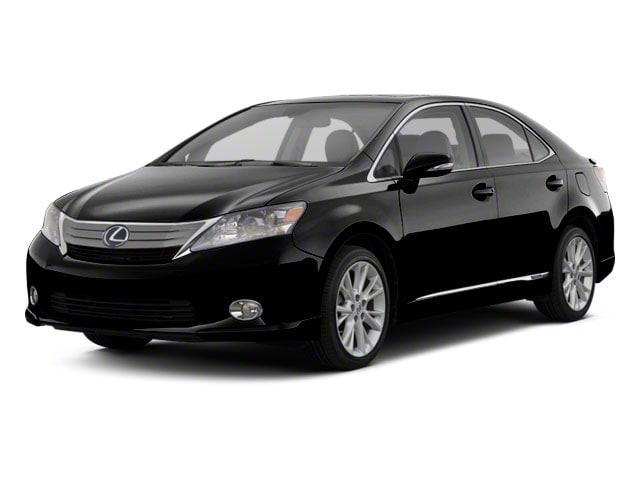
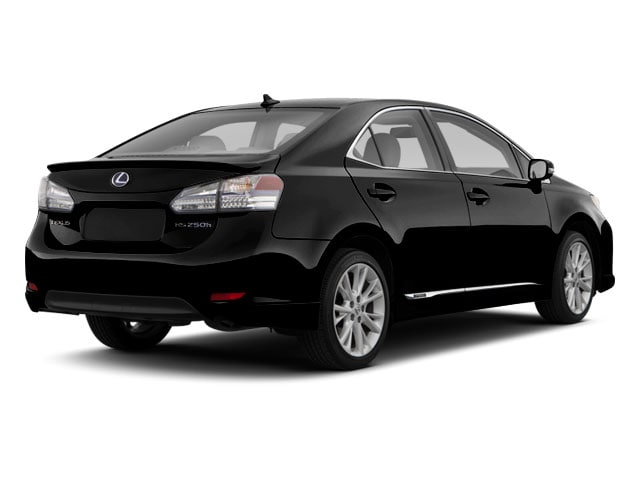
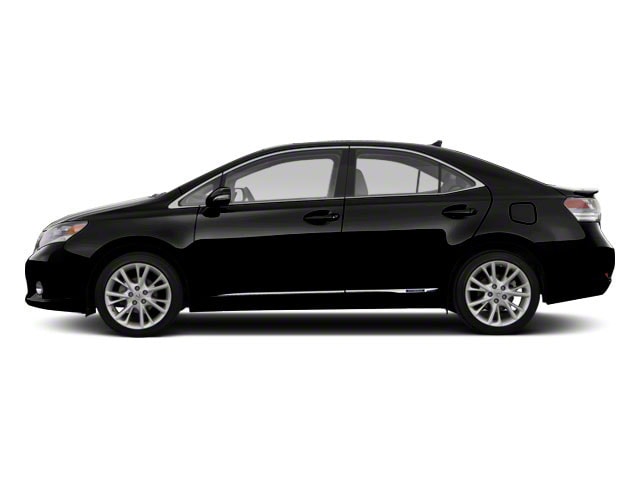
Based somewhat off the iconic Toyota Prius, the HS replaces the green hatchback's styling with a more upscale luxury sedan look. Even though it is a compact car, the HS still shares styling cues with the Lexus LS and Lexus RX thanks to Lexus' L-finesse design language from the angular front lights to the fastback roofline. Broad shoulder lines, chrome accent trim and clear LED taillights all help to give the HS its luxury design, but it is hard to ignore the sportiness injected into the design with a styling reminiscent of the first-generation IS sedan. This test car has an even sportier shape from the optional ($200) rear spoiler. The sleek shape of the HS directly contributes to its impressive aerodynamics with a coefficient of drag (Cd) that is 0.27 - in comparison, the Toyota Prius is currently the most aerodynamic production car with a Cd of 0.25.

Standing out as a hybrid-specific model, the HS has a grille design similar to current Lexus models but with a prominent three-bar pattern (eerily similar to the Honda Insight) instead of flashier chrome or mesh grilles. Poking out from just beneath the large Lexus emblem in the grille is one of the car's oddest options: a forward-mounted camera. As a part of the $700 package that includes a rearview backup camera, the forward camera turns on automatically at low speeds to help just distances to upcoming vehicles. It's not that this camera isn't useful, it's just not really necessary on a car with such a short, low hood.

2010 Lexus HS 250h Interior

As a dedicated hybrid model, Lexus wasn't constrained to any particular cabin design, so the HS 250h was given a unique interior design to fit its high-tech purpose and also exuded plenty of Lexus elegance. In addition to the soft leather and cool tech goodies that Lexus is known for, Lexus adds to the environmentally friendly attitude of the HS by using sustainable ecological plastics on about 30 percent of the interior and trunk. These plastic pieces are derived from plant-based resources rather than being petroleum based as are most plastics The cabin features high-quality materials, a stylish layout and excellent fit and finish, but the highlight of the HS 250h's cabin is the Lexus Remote Touch system. This mouse-like cursor allows the operation of many of the cabin systems (such as audio and navigation) very natural and effortless.

With an interior volume that is slightly bigger than the Lexus IS, the HS 250h has plenty of space for five adults with the driver getting a 10-way power adjustable seat and the front passenger getting an eight-way power adjustable seat. For cargo purposes, the placement of the batteries makes it so the rear seat can't be folded down, but the trunk offers a decent amount of storage capacity with a cargo volume of 12.1 cubic feet. For entertainment and convenience, the standard audio system is a 10-speaker system that features a six-disc CD/WMA/MP3 changer, USB port, auxiliary jack, Bluetooth streaming audio and Bluetooth hands-free phone connectivity.

Two pricey option packages helped load this HS with plenty of cabin tech, but it also added $6,025 to the final price. Adding the Navigation System ($2,125), the Lexus HS gets Lexus Enform (similar to GM's OnStar), Lexus Insider, a variety of XM services (including XMNavTraffic, XM NavWeather and XM Sports) and, of course, the hard drive based, voice-command navigation system with a display that features great graphics and clarity. The $3,900 Tech Package adds active cruise control, heads up display, park assist, Lane Keep Assist and a Pre-Collision System with driver attention monitor. Lane Keep Assist automatically pulls the vehicle back into the proper lane if the car begins to swerve out of its lane, while the Pre-Collision System using a sensor mounted on the steering column that can detect if a driver is paying attention in the even of an impeding collision. If the driver is not paying attention, the system sets off visual and audible alerts and prepares the Brake Assist for quicker brake reaction when the driver depresses the brake pedal.

2010 Lexus HS 250h Performance & Handling

Instead of the 1.8-liter engine used on the Prius, the HS 250h pairs a 2.4-liter inline-four with Toyota's Hybrid Synergy Drive system. This bigger engine produces 147 horsepower and 138 lb-ft of torque, but combined with electric motor, the HS produces a maximum 187 hp - almost 90 hp more than the Prius. This combined horsepower output gives the HS much better performance and acceleration than the Prius (which is expected from a luxury sedan), but the bigger displacement also means that it can't deliver Prius-like fuel economy with EPA estimates of 35 miles per gallon in the city and 34 mpg on the highway. Power from the engine is sent to the front wheels through a surprisingly smooth electronically controlled Continuously Variable Transmission (CVT).

Like the Prius, the HS is a full hybrid that is comprised of two electric motors. The first motor acts as a generator to provide power for the air conditioning and power steering during EV driving and to restart the engine for the car's start/stop capabilities. For EV driving, the second motor provides up to 141 hp to the drive wheels and it also is part of the brake regeneration system. Both motors are powered by a nickel metal hydride battery pack that is mounted between the rear seats and the cargo area. The HS' hybrid system features four drive modes (Normal, EV, Eco and Power) with the latter two focusing on improving fuel economy and maximizing performance, respectively. The coolest mode is EV mode which keeps the car under electric power as long as possible, but even with a light foot, the battery only has enough juice for about 1.5 miles of driving at speeds less than 20 miles per hour.

On the road, the HS feels just as smooth and comfortable as you'd expect from a car in this price range, and it can provide plenty of power when needed, too. Handling definitely isn't what you'll get from a sporty Lexus IS, but it also isn't the same feeling from the top-heavy Prius. Most people should be pleasantly surprised with the handling capabilities of this car as long as they keep in perspective that this car exists solely to be a luxury car with a lot of green credibility. While the HS has a similar driving dynamic of an entry-level luxury sedan, the hybrid drivetrain does create one noticeable trade-off: the brakes. Whether it is due to the regenerative braking function or some other vehicle aspect, the brakes on the HS are overly touchy and take some time to get used to so as not to come to a screeching halt for normal stops.

2010 Lexus HS 250h Safety

Lexus cars are known for their safety, and the new HS doesn't disappoint with five-star frontal- and side-impact protection from the National Highway Traffic Safety Administration (NHTSA) with a rollover rating of four stars. The Insurance Institute for Highway Safety (IIHS) gave the HS a 'Good' rating for frontal-impact protection, but it has yet to test the car for side- and rear-impact safety as well as roof strength. Standard safety features for all 2010 HS 205h models include ten airbags, active front head restraints, four-wheel anti-lock disc brake system with brake assist, tire pressure monitoring system, daytime running lights, Vehicle Stability Control and Safety Connect with automatic collision notification and stolen vehicle location.

Summary

Although the Lexus HS test model used for this review cost more than double the price of a base 2010 Toyota Prius, it delivers the same luxury and comfort that is expected from a Lexus with the increased fuel efficiency that Toyota Motor Corporation has been focusing on since its first hybrid vehicle debuted back in 1997. Rather than being a luxury sport sedan or full-size luxury cruiser, the Lexus HS is a personal luxury sedan that also does its part to give back to the planet. In the end, the 2010 Lexus HS 250h proves that there is a price to pay for luxury, but it shouldn't be at the expense of the environment.

Toyota Motor North America provided the vehicle this road test review.
Select Photos by Jeffrey N. Ross