2010 Hyundai Elantra Blue Road Test and Review
Hyundai may be in the midst of an impressive brand revolution with cars like the Hyundai Genesis (coupe and sedan), Hyundai Tucson and the all-new 2011 Hyundai Sonata, but it is still committed producing small, economic cars that helped make it what it is today. An example of this commitment is the 2010 Hyundai Elantra Blue. Looking to continue improving its public brand perception, Hyundai added the Elantra Blue for 2010 to offer even better fuel economy and value for its compact sedan, and after spending a week road testing the 2010 Hyundai Elantra sedan, it's clear that the South Korean automaker has a great rival for the Chevrolet Cobalt, Ford Focus, Honda Civic and Toyota Corolla.
Although the Elantra is available as a five-door hatchback (the Hyundai Elantra Touring) or a sedan, the new Blue model is only available on the latter as the base model with a starting MSRP of $14,145. From there, Hyundai offers a single option package and a list of a la carte options that could easily put the final price of the car close to the more luxurious Elantra GLS and the sportier Elantra SE. This car had a handful of add-ons and an as-tested price of $17,020. Even at this price, the new Elantra Blue is a great choice for those who are looking to save green and go green in 2010.
2010 Hyundai Elantra Blue Exterior
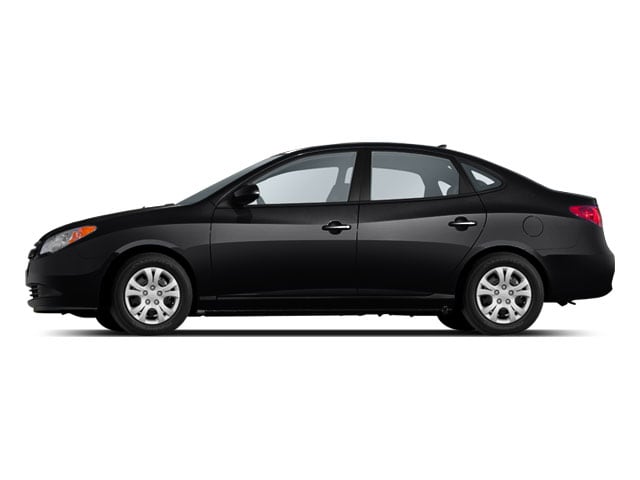
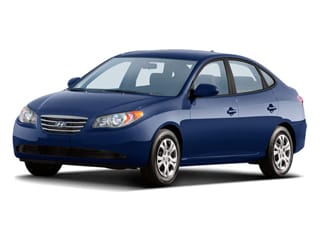
Visually, the 2010 Elantra does just enough to edge out most of its bland competitors, but an all-new Elantra design will debut next year and should be enough to put it at the top of its class even compared to the new 2012 Ford Focus and the 2011 Chevrolet Cruze. While the new styling will feature Hyundai's 'Fluidic Sculpture' design language like the new Tucson and Sonata, the current design portrays a look shared with the other affordable, economy cars in this class. Besides the obvious 'blue' badge on the decklid, the Elantra Blue is also distinguishable from other models by the lack of fog lights and 15-inch steel wheels with plastic hubcaps, but all 2010 Elantra sedans received minor changes to the exterior including a revised front grille and a strip of chrome on the decklid. The rounded shape and swoopy body lines do just about all they can to make the Elantra look attractive, but the bubbly lines also help create more passenger space and better visibility out of the car.
2010 Hyundai Elantra Blue Interior
There aren't many surprises to the Hyundai Elantra, but once inside the car it is instantly noticeable how much more room is available than in a Corolla, Cobalt and Civic. Considering the base Elantra is a no-thrills model where air conditioning and a radio are optional, the cabin is comfortable and spacious enough for five adults and is rather stylish as well. Like the exterior design, the interior layout isn't going to win any design awards, but it offers a better look and more equipment than many would expect from such an entry-level economy car. The Elantra's interior definitely focuses on serving a utilitarian purpose so any hopes of soft-touch materials should be replaced with a desire for plenty of storage nooks, crannies and compartments which this car offers. This doesn't mean that the interior is a barren wasteland, though, as it does offer a decent styling that features a two-tone coloring throughout the cabin along with bright accents on the center stack and steering wheel.
All 2010 Elantra models come standard with conveniences such as power windows, power door locks and remote keyless entry, but this test model added the optional ($1,700) Comfort Package that includes cruise control, a six-speaker audio system with AM/FM/CD/XM, a USB port, auxiliary jack and air conditioning with a cabin filter. This car was also equipped with the ($325) Bluetooth hands-free phone connectivity which is a standalone option as were the proprietary iPod cable ($35) and carpeted floor mats ($95). Hyundai's Bluetooth setup in this car is surprisingly easy to operate with all of the controls mounted between the upper reading lights within an easy reach of the driver (unfortunately, no steering wheel mounted Bluetooth controls are available).
2010 Hyundai Elantra Blue Performance & Handling
Other than value, the Elantra Blue also focuses on improving fuel economy by pairing the standard 138-horsepower, 2.0-liter inline-four engine with a five-speed manual transmission. The Blue trim level is the only 2010 Elantra available with the manual transmission which has been given revised gear ratios and a shift indicator light to let the driver know the most efficient shift points. Hyundai also made changes to the engine to include different calibration for the Elantra Blue and lower friction engine components and a smart alternator system for all models. With all of these changes, the 2010 Hyundai Elantra Blue gets EPA fuel economy estimates of 26 miles per gallon in the city and 35 mpg on the highway. Compared to the base model of the 2009 Elantra, these are improvements of eight percent and six percent, respectively.
When shifting at the car's recommended intervals, the Elantra has the acceleration of a fully loaded dump truck, but revving the engine up closer to its peak horsepower at 6,000 rpm is good enough to feel safe when merging. While the shift light is intent on keeping the engine speed below 2,000 rpm, the abundance of engine noise present in the cabin when the engine is pushed to its upper revs should also be a good reminder that this compact sedan is aimed at fuel economy not sportiness. The Elantra's steering and suspension matches the rest of the car with a comfortable tuning but numb responsiveness, so don't expect this car to handle like the more nimble Civic. Handling the bumps and turns of average roads are ok, but the small, thin tires just aren't able to do much for the car's cornering abilities (handling should be much better on the Elantra SE with its taller, wider tires and wheels). One major advantage the Hyundai Elantra does have over most of its competitors is the fact that it is covered by Hyundai's 10-year/100,000 mile powertrain warranty in addition to a five-year/60,000 basic warranty.
2010 Hyundai Elantra Blue Safety
The National Highway Traffic Safety Administration (NHTSA) gave the 2010 Hyundai Elantra five stars for frontal-impact protection, but even with standard side curtain airbags and front seat-mounted side airbags, the Elantra only received four stars for side-impact protection. The Insurance Institute for Highway Safety (IIHS) gave the Elantra saw more favorable results from the Elantra with 'Good' ratings awarded for frontal-, side- and rear-impact protection. With Electronic Stability Control standard on Elantra SE, it appears the only thing lacking for a Top Safety Pick was the roof-strength test. Standard safety features for all 2010 Elantra models include six airbags, active front head restraints, four-wheel anti-lock disc brake system with electronic brake-force distribution and tire pressure monitoring system.
Summary
With a starting MSRP and fuel economy among the best in this segment, the 2010 Hyundai Elantra Blue has hit the nail on the head of what an affordable, economy car should be. The incredible value would make the Hyundai Elantra a great first car, but the abundance of interior space could also make it a decent small family car. Either way, the Hyundai Elantra Blue proves that when it comes to saving the environment and saving money at the pump, the best green technology isn't always a diesel, hybrid or EV. For those who might be willing to trade a few mpgs for more standard equipment and an automatic transmission check out the Elantra GLS or Elantra SE.
Hyundai provided the vehicle this road test review.
Select photos by Jeffrey N. Ross