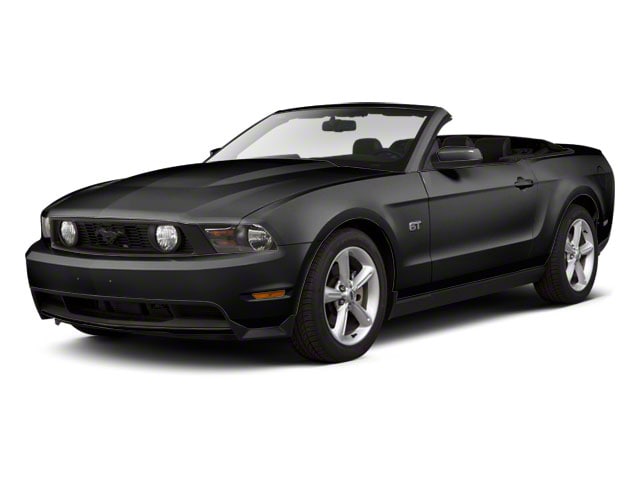
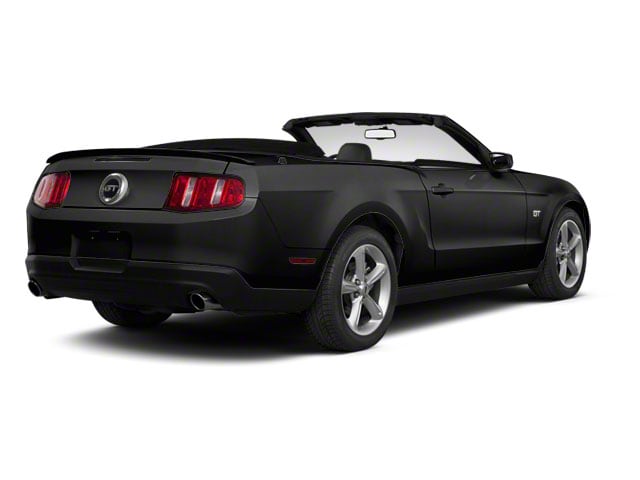
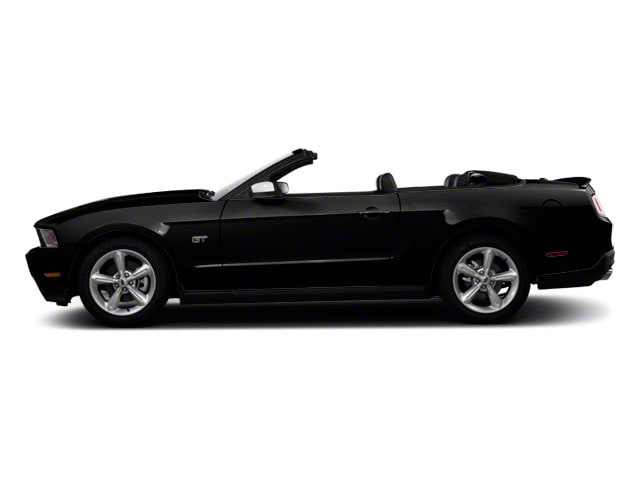
First Drive: 2011 Ford Mustang and 2011 Ford Mustang GT
With plenty of heat coming from the all-new Chevrolet Camaro, the 2011 Ford Mustang has received numerous upgrades for 2011 in an attempt to regain the top sales spot against its longtime rival. The highlight of the changes to the 2011 Ford Mustang is definitely the new powertrain combinations, but Ford also focused on giving the car better handling and more refinement. As a proper backdrop for its introduction, Ford unleashed the 2011 Mustang and 2011 Mustang GT with the twisty canyon roads and picturesque scenery of the Los Angeles area as its backdrop.
Upon firing up either of the 2011 Mustang models, both engines exhibit a deeper, throatier exhaust note which helps add more attitude and a sound very reminiscent of the Mustang GTs from the 1980s that made the 5.0-liter engine popular. Competition to the Mustang has grown in recent years to include cars such as the Honda Accord Coupe and the Hyundai Genesis Coupe, but traditional muscle cars like the Dodge Challenger and the Chevrolet Camaro are still the prime targets. With this in mind, Ford not only gave the base Mustang and the Mustang GT more powerful engines, it also gave both engines competitive fuel economy abilities. Both engines utilize Ford's Twin Independent Variable Camshaft Timing (Ti-VCT) to deliver horsepower and fuel economy that are either class leading or very close to the top.
On the first day of the drive, Ford was all about showing off the new V-6 engine used in the base Mustang models. The new 3.7-liter V-6, it makes the 2011 Mustang the first production car ever to deliver more than 300 horsepower and 30 miles per gallon on the highway with official ratings of 305 hp and 31 highway mpg. Not only does the 2011 Mustang add more power for straight line acceleration, it also offers improved chassis strength for better handling. To show this off, Ford set up an autocross and had a handful of V-6 Chevy Camaros on hand for side by side comparisons. Behind the wheel, the Mustang felt nimbler than the Camaro, but while observing the two cars navigate the tight track, it was visually obvious how much better the Mustang handled compared to its rival. As shown in the photo above, the Camaro exhibits noticeable body roll in tight corners, while the Mustang remains level and planted. This leads to less understeer and better control which result in better times as all of the drivers posted better lap times in the Mustang than in the Camaro.
The second day of the launch was dedicated to the more powerful GT including drive routes along more aggressive twisty roads that pushed the car to its limits. The rebirth of the 5.0-liter V-8 gives the 2011 Mustang GT 412 hp and 26 highway mpg - which ironically matches the maximum mpg of the base 2010 Mustang. Like the previous day, the highlight of day number two involved a head-to-head comparison with the Camaro, but this time it was on an eighth-mile stretch of pavement for drag racing. The autocross track may have showed off the improved handling capabilities of the new Mustang, but the drag race showed the car's brute strength. Like the autocross comparison, most drivers posted significantly better times along the eighth mile track, and Ford said that official times should be in the mid to high 8 second range for this track and in the low 13 second range on a full quarter mile track.
The highlight of the launch was definitely watching the Mustang lay down consistently faster times next to the Camaro at the hands of both novice and seasoned drag racers and autocrossers. Both tests were examples of the huge efforts Mustang engineers put into the new car to improve the performance and handling capabilities of the 2011 model. Gains in performance were obviously made in the new powertrain options, but Ford improved the handling of the new model by strengthening chassis components such as adding a Z-brace to the front suspension, stiffer rear lower control arms, redesigned rear upper control arm and stiffer A-pillar to rocker panel supports for better torsional stiffness on both coupe and convertible models.
The Ford Mustang has made itself quite a reputation in recent years for offering a wide number of special edition packages, and the 2011 model is no different. The base Mustangs will be available with an appearance package inspired by and named after the Mustang Club of America, while the V-6 Performance Package adds some minor performance upgrades including a GT-tuned suspension, sporty 19-inch wheels and a 3.31 rear axle ratio. For the Mustang GT, it brings back the California Special appearance package and gets sportier stopping abilities with the Brembo Brake Package. Both the Mustang Club of America and California Special packages are identifiable by the billet front grille, side body stickers and unique decklid spoilers.
Other than obvious styling changes associated with the special appearance packages, minor changes were made to the Mustang's exterior design for better aerodynamics. A redesigned front fascia, rear wheel spats and more underbody panels all help to make the new Mustang sleeker thus improving fuel economy and reducing wind noise. Finally, three new colors will be available on the 2011 Mustang such as Ingot Silver, Race Red and the Yellow Blaze Tri-Coat that made its debut at the 2010 North American International Auto Show in Detroit. Each special edition model gets unique wheels, but the Mustang GT with Brembo brakes get dark, five split spoke wheels.
Most of the changes on the 2011 Mustang were made to improve handing and acceleration, but Ford also included plenty of upgrades to add more refinement. Although no major styling changes were made inside the 2011 Mustang, multiple upgrades were performed to reduce noise, vibration and harshness (NVH) levels and to give the car a quieter cabin at highway speeds. These updates include new soiund absorbers throughout the cabin including under the hood and decklid, over the transmission tunnel and on just about every surface inside the car. Although I was unable to test out the convertible or glass roof models, the coupe was noticeably quieter in everyday driving and the car. Aside from the updates focusing on NVH, Ford's attention to detail inside the car is equally obvious. To highlight its efforts in improving interior fit, finish and quality, Ford had the Audi A5 on hand as a benchmark for a luxurious and sporty coupe. The only real major changes inside the car are the addition of fold down rear seat headrests for better driver visibility when there are no rear passengers.
As far as pricing goes, the 2011 Ford Mustang V-6 has a starting MSRP of $22,995 while the more powerful Mustang GT starts at $30,495 - both prices include requisite destination charges. Pricing for the special packages weren't released, but should be available closer to the launch date this spring. For those looking to experience the Mustang in raw racing form, Ford will also introduce the 2011 Mustang BOSS 302R. The racetrack-ready BOSS 302R revives the BOSS name used 40 years ago, and it is a purpose-built racecar for road racing series such as Grand-Am and SCCA. Each BOSS 302R will feature the 5.0-liter V-8 paired with the six-speed manual transmission and comes standard with roll cage, race seats with safety harnesses, Brembo brakes and dampers and spring tuned specifically for road racing. The 2011 BOSS 302R will have a starting price of $79,000 with a more intense 302R1 package that starts at $129,000.