Recent Articles
Popular Makes
Body Types
How To Get Maximum MPG
No matter what you drive, it’s easy to get better mileage
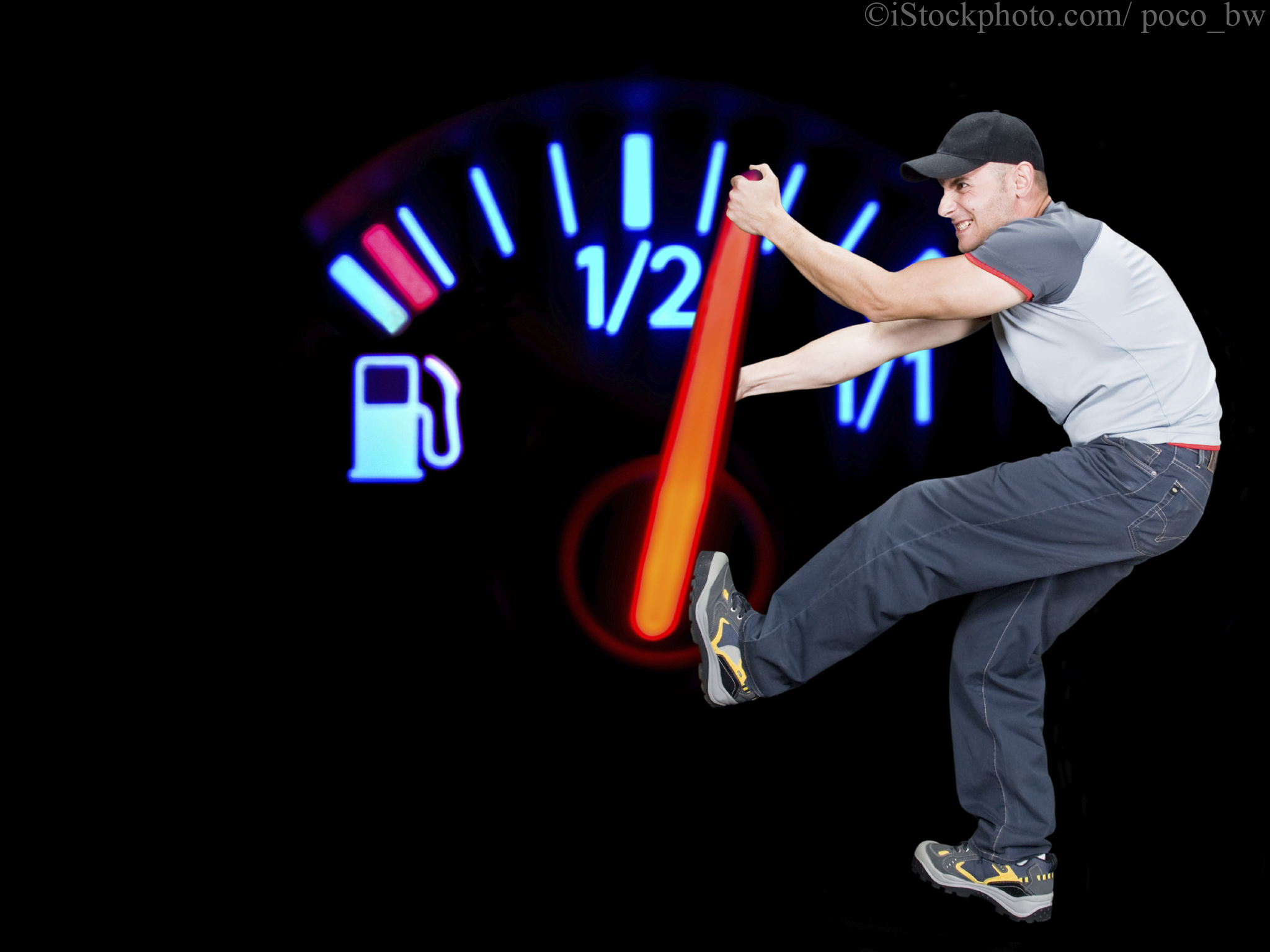
In recent weeks, Americans’ pain at the pump has eased as gas prices reached record highs and then came to rest below, but still within striking distance of the $4 a gallon mark while oil companies reap record-breaking profits quarter after quarter.
Logic would argue that higher prices at the pump dictate a change in lifestyle, with driving fewer miles the obvious modification to daily living. But our penchant for chasing the American dream into the hinterlands where it’s affordable to own a home means that we, as a nation, are spinning our odometers faster than ever, navigating traffic-choked highways and byways to and from our positions at distant corporations that rarely reward such behavior with pay raises in the twisted mentality that nothing matters anymore but quarterly profits, rising stock prices, and fat executive bonuses. Want to work at home? Not unless your boss knows how to manage by task. After all, you might be watching “Oprah” on the company dime.
So downsize already. Go get that Honda Civic that manages 40 mpg on the highway. Nevermind that the neighbors might think you’ve been downsized, outsourced, checked into the boards of the corporate rat race. Not so easy, dumping that Chrysler 300C or Land Rover LR3 for something that makes sense as a commuter vehicle, is it? In America, you are what you drive, and what you drive tells your peers what level of success you’ve attained, so damn the torpedoes and widen that hole in the ozone layer even more.
And we call corporations twisted.
Page 2
Maybe we need even higher fuel prices. Everywhere else on the planet, small, tidy, efficient vehicles rule because gas is freakishly expensive. We think it’s ugly on American roads now, it could be worse. Take a look at this recent poll of gas prices from around the globe, compiled by Wikipedia:
Sierra Leone
$18.42
Turkey
$10.13
Norway
$9.55
Netherlands
$8.95
Germany
$8.63
United Kingdom
$8.18
Denmark
$8.14
Iceland
$8.06
Finland
$7.98
Belgium
$7.64
Hong Kong
$7.56
Sweden
$7.42
Italy
$7.30
Israel
$7.20
Croatia
$6.57
Romania
$6.32
Switzerland
$6.24
Brazil
$6.01
New Zealand
$5.42
Australia
$5.18
There … feel better? We didn’t think so. We should point out that most of these countries offer viable commuting options that are actually used by a wide-ranging segment of the populace: Buses, trains, subways, scooters, and bicycles are in heavy use for commuting everywhere in the world, and even in a handful of U.S. cities like New York, Chicago, and San Francisco. But generally, Americans are almost totally dependent on their automobiles, and we’re clearly the minority.
The good news is that you can learn to maximize the miles you squeeze from a gallon of gas, even if you’re rolling in a raised Hummer H2. It will take some effort and self-restraint – two traits sadly disappearing from the American psyche – but it’s possible. And you might even be able to feed the kids something more substantial than ramen at the end of the month.
Page 3
Getting the most miles per gallon is easier than you think, and it doesn’t necessarily require the purchase of a more fuel-efficient vehicle. Think about it: If that Mustang GT is paid off, buying a new Toyota Corolla is going to take a bigger chunk of change out of your pocket than anything a gas pump can dole out. But whether you drive a V-8-powered pony car, a high-MPG econobox or a hybrid model that runs on the battery part of the time, the majority of cars, trucks, and SUVs on the road today require the use of unleaded fuel to get on down the highway. These tips will help maximize the distance you can travel on any given tankful and save you money at the pump
- Check your owner’s manual to , then buy it. Resist the urge to buy higher-octane gas for “premium” performance. Octane has nothing to do with the gasoline’s performance, just its volatility factor in the combustion chamber. The higher the octane, the more stable the gas in the combustion chamber environment. Why do high-performance vehicles need higher-octane fuel? Because the combustion chamber environment is much hotter in the performance engine. Using high-octane fuel reduces pre-ignition in the upper regions of the combustion chamber, which can damage valves and pistons if allowed to go for long periods of time. Experts from the Automobile Association of America (AAA) say that about five percent of the cars sold in the U.S. require premium gasoline. Yet premium gas accounts for 20 percent of all gasoline sold. Check your owner’s manual for the recommended octane rating and stick to it.
- Properly inflated tires suffer less rolling resistance and therefore can improve fuel efficiency by making it easier for your car to move down the road. Under-inflated tires will make it harder for your car to move down the road, which means your engine uses more fuel to maintain your speed. A single tire, under inflated by two pounds per-square-inch (PSI), increases fuel consumption by one percent. To illustrate the point, deflate your tires by five PSI and try to push the car. It’s not easy. Now inflate those tires and see how pushing the car is much easier. Check your owner’s manual or the decal in your car’s doorjamb for correct inflation levels.
- Make sure that you and maintain your car’s powertrain according to your owner’s manual. This will ensure that your car’s engine will operate at maximum efficiency, thus providing the best fuel economy. Dirty air filters, old spark plugs and low fluid levels can affect engine performance and fuel efficiency. A properly-maintained engine uses less gas.
Page 4
- so you can do them all in one trip. This will cut your total miles driven. Many people drive back and forth between destinations. Plan ahead. Set up your errands in succession and save gas.
- Public roads are not racetracks. Don’t race up to red lights or stop signs, avoid quick “jackrabbit” starts, and stop goosing the throttle to jump into holes in traffic. A car uses more fuel under hard acceleration. And if you own a “full” hybrid vehicle that can operate at low speeds on the battery pack, this is especially important. The more you depress the accelerator, the more demand you make on the hybrid powertrain, and the earlier the gasoline engine will kick in and start consuming fuel.
- As your speed increases, the aerodynamic drag increases in exponential fashion, so the engine works harder to maintain your speed and move the car through the atmosphere. The harder the engine works, the more fuel it uses. Driving 62 mph instead of 75 mph can reduce fuel consumption by as much as 15 percent. This is one reason why some hybrids get lower fuel economy on the highway than in the city.
- Don’t haul unnecessary weight in the passenger compartment or trunk. Heavier vehicles use more fuel.
- The air conditioner puts extra load on the engine, forcing more fuel to be used. On average, a car operating with the air conditioning engaged uses about 20 percent more fuel.
- Open windows, especially at highway speeds, increase aerodynamic drag and the result is up to a 10 percent decrease in fuel economy. If you must have fresh air coming into the vehicle, run your climate system on ‘outside air’ and ‘vent’, and crack the window for additional ventilation.

Page 5
- Consider getting a as this will help to minimize drag over the cargo bed and allow the vehicle to slip through the air stream more efficiently. Do not, however, lower the tail gate as this creates more turbulence as air rushes over the cab and will decrease economy. Leaving the tailgate up creates a bubble of air in the bed area resulting in less disruption to the air traveling over the cab, in effect it acts like a less efficient tonneau cover.
- Maintaining a constant speed over long distances saves gas. The next time you drive without cruise engaged, note how your speed creeps up and down. Constant deceleration, followed by acceleration, uses more fuel. The cruise control feature keeps your speed constant, saving gas (and maybe a speeding ticket, too).
- If you anticipate being stopped for more than one minute, shut off the car. Restarting the car uses less fuel than letting it idle. For most hybrids, this is not an issue, because the gasoline engine automatically shuts down when the car is stopped, and the accessories – such as the air conditioning, lights, and stereo – operate off the juice stored in the battery pack. This is also one reason that hybrids often get better fuel economy in the city than on the highway – the gasoline engine is shut off when idling in traffic.
- but only if you’re planning to replace your current car anyway. You might want to consider downsizing just a bit. By this we don’t mean selecting a smaller engine for the same size vehicle. Instead, get a smaller vehicle. If you select the smallest engine available for a larger vehicle, you will end up using more fuel because the smaller engine has to haul the same weight as the larger engine, therefore it has to work harder and might use more gas. For example, a pickup truck with a V8 could get better gas mileage than a comparable truck with a V6, because the more powerful V8 works more efficiently to move the truck’s mass.
Page 6
Hybrid owners have been making a fuss about real-world fuel economy ever since the 2000 Honda Insight debuted and promised 72 mpg on the highway. Evidently, nobody told hybrid drivers that they had to follow the same common-sense laws that govern fuel mileage with regular gasoline vehicles. Hybrid owners need to understand that they can’t drive their vehicles as if they don’t have a gasoline engine.
Of course, full hybrids, those that can run solely on battery power, like the Ford Escape Hybrid, benefit from slightly different types of driving than regular gasoline vehicles. For example, an Escape Hybrid is more effective in the city than on the highway, in direct contrast to straight gas burners. That’s because the engine stops running when stopped or when traveling at low speeds, using the juice in the battery pack to operate the lights, wipers, stereo, and air conditioning. Also, we’ve been successful at cruising Los Angeles traffic between 25 and 30 mph in the Escape Hybrid, without the motor running. At least until the slightest hill needed to be climbed, or impatient motorists began honking horns to get us moving away from a traffic light.
Finally, remember that no matter how hard you drive a hybrid, it will get better fuel economy than the equivalently-powered gasoline version. In a Toyota Prius, you could staple the accelerator to the floor away from every light and stop sign, drive 80 mph on the expressway, and jump from lane to lane during the commute and still get better gas mileage than a gingerly-driven Toyota Matrix of similar size and power. So even if you’re not getting what the EPA promised, take heart. You’re probably doing better than the guy in the next lane, especially if your tire pressure is correct, your powertrain has been properly maintained, and you’re storing the golf clubs, baseball cleats, and soccer balls in the garage rather than your trunk.
by Staff Photo credit: iStockphoto.com