
Recent Articles
Popular Makes
Body Types
Teen Driving and Buying Guide: The First Car War
Don't despair -- a safe and stylish car is within your reach and budget
Remember your first car? Of course you do. We all remember the first car we owned. It was our ticket to freedom and adventure, the wings we used to fly away from childhood and toward our adult years. Mine was a beat-up old Mazda RX2, a hand-me-down from my father. My sister - a black and yellow Maverick. My best friend at the time - I forget his name - drove a 1968 Chevy Camaro. Now that was a nice car.
Except for the fact that it was a death trap, and there’s no way I'd ever let my daughter drive a car like that.
Welcome to the First Car War, a little drama that has played out in homes across this country for generations. Parents forget how important that first car is. Teens forget who's actually going to pay for the vehicle. Around and around it goes. Finding a happy middle ground is possible, even easy, if you follow this Teen Driver's Buying Guide:
Most parents never think a major accident will happen to their son or daughter. After all, they reared little Johnny right, so he would never in a million years drive drunk, or race in the streets. According to a recent Autobytel survey, nearly half of the parents who responded expressed confidence in their own children's driving habits. When asked what bothers them most about their teens' driving, 44 percent of those surveyed responded that their teens are generally responsible drivers, with 20 percent indicating that none of their kids' driving habits is a source of concern. Only 4 percent of those surveyed identified drinking and driving as their top teen driving worry. Drinking and driving is, in fact, the number one killer of young people, and 43 percent of teens who participated in a recent clinical study said they'd either driven while intoxicated or ridden in a car with a driver who'd been drinking or using drugs.
So parents: Wake up! Your child will drive distracted, will get into accidents and even get a speeding ticket. Your duty is to make sure your young driver knows how to drive, and is in a car that will protect and avoid an accident.
First, look beyond the airbags. While a very valuable piece of equipment, airbags can't stop the car before it hits something. That said, don’t go cheap; if side-impact bags are an extra $500, spring for them. Only the driver can do that, so you want a car that makes it easy for them to avoid an accident. Try to find a car with a good anti-lock braking system. If the best car in your price range does not come with an ABS system, make sure the disc brakes are large and high quality.
Remember too that there is more about safety than technology. For example, how strong is the structure of the car, and what is the suspension like? Also keep in mind maneuverability. It may seem that buying a tank is safe, but the ability to avoid accidents thanks to a quick-reacting suspension and nimble steering is just as important as surviving an accident should one occur. Of course, also look at recalls, especially any that have to do with safety systems.
One of the most important but frequently overlooked features of driver safety is front and rear visibility. It's imperative that an inexperienced driver be able to see the nose of the car. Blind spots in back and to the side are the easiest way to visit your insurance claims office. For more information about the safety and structure of new cars, check out our new car review section.
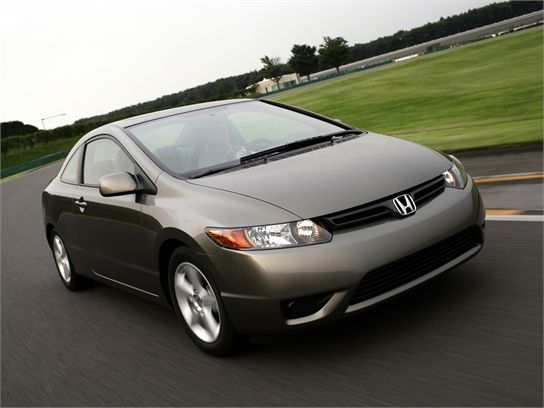
Honda Civic Coupe
Scion xD
Smart ForTwo
Considerations based on standard safety equipment, such as air bags, ABS and available electronic stability control on cars under $15,000 and standard on cars under $20,000. Vehicles also scored no less than Acceptable, the second highest possible mark, in Insurance Institute for Highway Safety front and side impact crash testing
Page 2
Some automakers, such as Toyota and Honda, are known for building quality vehicles. Yet the fact is that most car builders have made significant strides in the quality of their vehicles. Regardless, before you decide on a car – especially if you’re buying used – read about the vehicle, its manufacturer, and check out what other drivers have to say.
Chances are, your teen will have their first car for five years. Make sure you buy a car that will grow with them and their changing lifestyle. Convertibles, while fun in the sun and very popular, are a bad idea due to the lack of cargo space. After a year or two, it becomes less important to cruise the beach with the top down than transport your stuff to a dorm room. Large SUVs are also a bad idea. Most teens don’t need that much room inside, and a large SUV will be a severe budget cruncher when it comes to gas mileage. Large SUVs are bad for another reason: It takes advanced driving skill to keep one on the road should an emergency situation arise, and, in case of an accident, a large SUV will do significant damage to the other party.
Nissan Versa Hatchback
Toyota Yaris
Considerations based on body style and functional interior design.