Sales involving America’s two favorite alternative propulsion systems—hybrid and diesel powertrains—spent most of 2011 going in opposite directions, with the Japanese disasters disrupting the former and growing demand for the redesigned Volkswagen Jetta boosting the latter. But both segments also, by the end of the year, ended up in surprisingly similar positions.
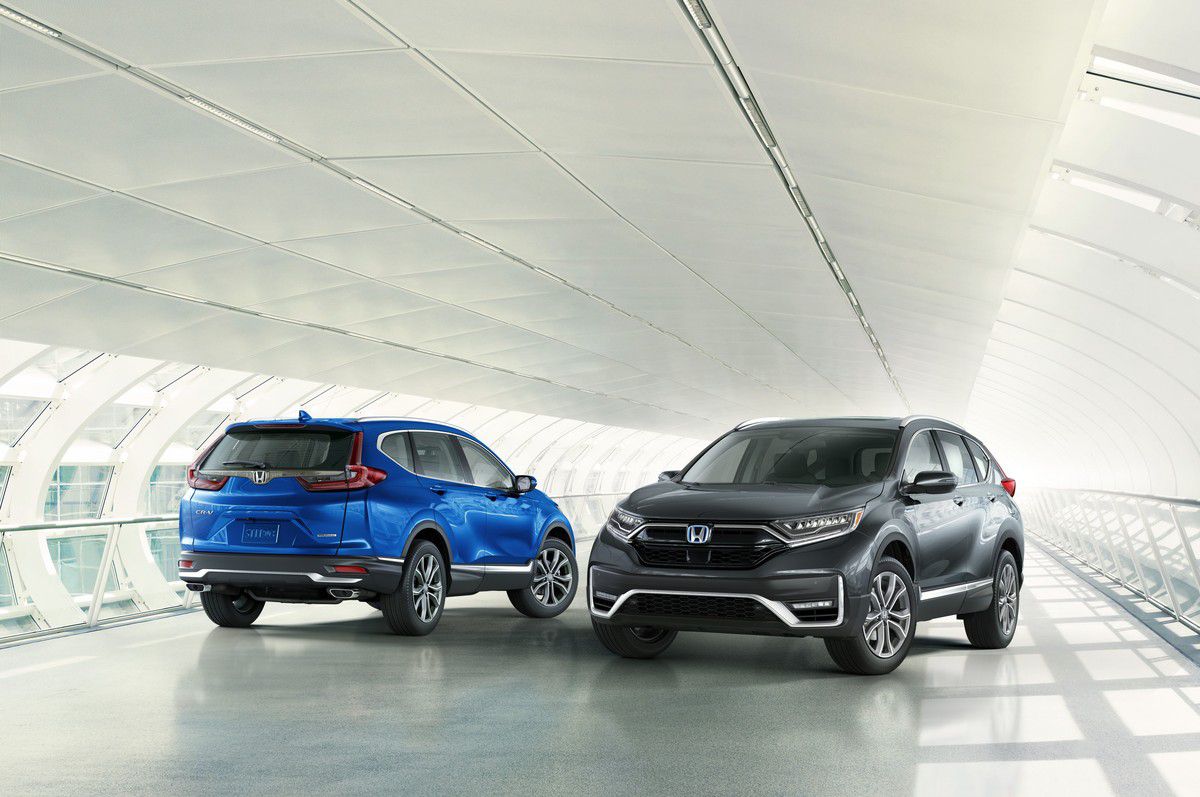
An Up and Down (and Up) Year for HybridsThe hybrid market kicked off 2011 in a state of flux, coming off a third straight year of falling sales but with some highly anticipated models—like the Hyundai Sonata Hybrid and Toyota Prius v—producing strong buzz. Thus, even before that pair debuted, hybrid deliveries were making a notable move northward during the first quarter of last year, capping things off with a 46.4 percent jump in year-over-year sales in March. The original Prius, naturally, was leading the way, finishing the third month of 2011 as the ninth-best-selling vehicle of any kind in America while showcasing a gaudy 57.9 percent leap in sales. More significantly, Honda’s two dedicated hybrids, the Honda Insight and Honda CR-Z, were picking up steam as well. The Insight garnered a 68.4 percent sales improvement last March, and the CR-Z benefited from a 54.4 percent month-over-month sales hike (the car was too new at the time for a year-over-year comparison).
Unfortunately, that trio represented more than 67 percent of all hybrid deliveries at the time, so when the tsunami and earthquake struck Japan, halting production, the hybrid market cratered. Of course, it also didn’t help that the summer of 2011 brought relatively low fuel prices, too, clearly shifting overall consumer demand to the truck side of the business and away from all high-efficiency vehicles.
Hybrid sales plummeted by more than 40 percent in both May and June, but the first month of summer brought a first glimmer of a rebound, thanks to the introduction of the Sonata Hybrid. It was the No. 2 hybrid seller in June, and really began pulling the market upward in July, with 4,177 deliveries. The most ever by a current-generation, non-Prius hybrid.
But then something interesting happened: After topping 4,000 units again in August, the Sonata sold half that number in September in the face of an improving supply—and sales—of Toyota hybrids, and that trend continued through December. The Lexus CT 200h (from Toyota’s lux division) outsold the Sonata hybrid in both last month and in November, and the all-new Toyota Camry hybrid had closed to within 110 sales by December.
Meanwhile, Honda’s top three hybrids, also including the all-new Honda Civic Hybrid, continued to struggle as their automaker became the victim of a new round of natural disasters, this time in the form of devastating floods in Thailand.
It will be interesting to see what happens when the Blue Oval’s next-gen hybrids—Ford C-MAX, Ford Fusion and Ford Escape—reach the market, but for now, Toyota remains the only automaker with a hybrid lineup that has transcended its green niche to attract mainstream volume. And that position is almost entirely based on the success of the Prius.
The bottom line for hybrids in 2011: 268,807 sales, representing a 2.2 percent decline and accounting for about 2.1 percent of the total U.S. market, which itself was up 10.2 percent on the year.
One final factoid: The Buick LaCrosse with eAssist—essentially a mild hybrid system—reached the public in October and drummed up 297 sales, which grew to 522 sales in November and 982 in December. That may not seem like a lot, but it was enough to move the car to No. 7 on last month’s list of hybrid best sellers.
The Jetta’s Diesel DominationYou can consider the Jetta to be the Prius of the diesel market, and the sales similarities in 2011 were uncanny: The Prius accounted for 50.77 percent of all hybrid sales, while the Jetta TDI represented 50.71 percent of all U.S. diesel sales. The biggest difference involves volume: The Toyota notched 136,463 sales last year to the Volkswagen’s 51,530.
However, as indicated earlier, the advantage goes the other way in terms of overall market growth. Diesel sales climbed 36.9 percent in 2010, then ratcheted deliveries up by another 27.4 percent last year. Then there’s the other other hand: Through the first eight months of 2011, diesel sales were actually up by 37 percent, and August’s increase of 20.4 percent was far and away the worst performance of the year for diesels. But with increasing demand for hybrids, interest in diesel products fell off abruptly, and monthly sales rates from September through December went as follows: -5.1 percent, +.7 percent and +.7 percent, before rebounding for +16 percent bump last month.
Unsurprisingly, sales of the Jetta diesel haven’t been in the black since August.
Most of the rest of the diesel players are premium vehicles from BMW, Mercedes and Audi, so it’s hard to see this technology having much of an impact on mainstream buyers, yet, but there are a few products worth calling out. The diesel version of the VW Golf saw continued steady growth in 2011, lifting sales to 9,768 units—making it the No. 2 diesel in the U.S.—on growth of 69 percent for the year. The completely redesigned VW Passat is extending its charm with its TDI model, attaining 1,078 sales in December as the third-best-selling diesel in America (and one of just three to top the 1,000-delivery mark last month, along with the Jetta and BMW X5).
The Audi A3 is the starter entry for those interested in Vorsprung durch Technik, and customers Vorsprung their way into an A3 TDI for $30,250; a total of 3,611 customers did so in 2011, an improvement of 3.9 percent. The BMW 335d—with an MSRP of $44,150—wouldn’t be out of reach for mainstream luxury customers, and it endured a sales slip of 5.8 percent on 3,583 deliveries, albeit at a time when the current-gen 3 Series is right at the end of its life cycle.
Based on numbers like these, an effective case could be made that more affordable choices would find success in the American marketplace, and with GM answering that call—via the upcoming Chevy Cruze diesel—dealers should easily be ringing up more diesel sales in the near-term future.