Autobytel's grass roots campaign to help keep neighborhoods safe
Introduction
Take the Pledge to Slow Down
Our nation’s drivers hold the key to safer streets and saved lives, and all it takes is a promise to slow down and remove distractions from inside our vehicles. Take the Pledge and make an extra effort to watch your speed in areas where children or families may be present. You’ll be playing a critical role in our fight to slow down traffic on our neighborhood streets.
On the following pages, you'll learn about how it all started, how it works, why it's important and, most of all, how you can Take the Pledge to Drive Safely!
Concerned by the increasing danger that speeding cars posed to the families in her Charlotte, North Carolina neighborhood, Sherry Williams posted a simple, homemade sign in her front yard encouraging passersby to "Take the Pledge and Limit Your Speed." She also asked each of her friends to tell five friends about her Pledge (and to ask these friends to ask five of their friends, etc). Her message struck a welcome chord in her local community – which is home to three public schools – and quickly sparked a far-reaching groundswell of support. From this grassroots beginning, The Pledge was born.
Sherry was born in Birmingham, Alabama in 1944 and has lived in Charlotte since 1970. She has a daughter, Kelly, and Sherry and her husband of 21 years, Sam, are together the proud grandparents of seven grandchildren. Although job and family demands often left little time for civic affairs during her daughter's upbringing, Sherry always managed to stay involved – keeping up on current events, voting diligently, and even writing her local newspaper from time to time (when she "felt inspired to right a wrong that needed righting"). She's worked full time with Sam, a Charlotte attorney, for the past 25 years, managing his law office and assisting with his law practice.
Living by the 'Golden Rule':
"My mother always told me to treat others as you would like to be treated," said Sherry, on her decision to start this grass-roots campaign. "It's the 'golden rule,' but it's amazing how many people forget it as soon as they're behind the wheel. I looked at the kids playing in my neighborhood, and I wished they could live in a world where people drove slowly enough so they'd have time to stop if one of those kids – or a pet – ran into the road … And then I thought, why not? What's stopping us from living in that world?"
The Pledge in Action:
The answer, as Sherry has proven, is us. As a direct result of the Pledge campaign, over 2,000 Take the Pledge to Slow Down campaign decals have been placed on all Charlotte Police Department vehicles. The Department is also instructing its officers to actively encourage Charlotte drivers, particularly speeders, to take "the Pledge," a signed contract to drive safely and courteously on neighborhood streets. Autobytel is also providing a prominent Charlotte circuit court judge with Pledge certificates to support his policy of asking all traffic offenders who enter his courtroom to take the Pledge.
Results:
The very good news is that speeding has dramatically decreased in Sherry's neighborhood. The even BETTER news is that Sherry's neighborhood is just the beginning. For example, in Los Angeles, over 2,000 Take the Pledge to Slow Down campaign decals and over one hundred lawn signs have been distributed by Los Angeles Police Safety Officers in schools throughout the city. Since Autobytel's national Pledge campaign has gone live on www.carsmart.com, thousands of concerned citizens from coast to coast have taken the Pledge online – a number which is likely to increase exponentially, now that the Pledge has rolled out on all of the Autobytel websites.
It Begins with You:
The goal of safer communities and saved lives begins with you. By taking the Pledge –and encouraging your friends, family and road-mates to do the same – you'll be helping to raise awareness of the potentially deadly impact of speeding and careless driving. You'll also serve as a shining example for a better, happier and safer America – a place where everyone drives like they would in their neighborhood.
Driving Distractions
A new generation of technology gadgets – from Blackberries and iPods to hundred-channel satellite radio receivers – are making the driving distractions associated with cell phone conversations seem almost quaint. If driving while talking, even on a hands-free set-up, is dangerous – and a new study finds that it can be more dangerous than drunk driving – then just imagine how dangerous it is to type a text message with one hand on the wheel, or to find that one song among thousands on an iPod. If you're thinking that nobody does crazy stuffa sense of self-preservation keeps people from doing things like that, you're dead wrong. In fact, nearly 40% of the drivers polled by Autobytel say they've typed a text message while driving, 30% say they've driven while using their iPods with headphones...and an alarming 58% admit that they've taken BOTH hands off the wheel because they were fiddling with high-tech gadgets. It should come as no surprise, then, that when asked to describe their experience with in-vehicle gadgets and driver safety, 88% described it as either a moderate or serious safety threat, with 40% characterizing today's tech-distracted drivers as "out of control."
With that in mind, Autobytel's safety campaign, "Take the Pledge to Slow Down," offers five basic tips for keeping in-vehicle technology distractions to a minimum, and keeping your eyes and mind focused where they belong: On the road.
1. It's the yakkin' that's distractin':
Although hands-free cell phones keep your hands on the wheel, they don't necessarily keep your attention on the road – and there's evidence that they don't greatly reduce the risk of accident. In fact, the NHTSA finds that speech-based interaction, hands-free or not, is associated with a 30% increase in reaction time. So, the safest strategy is to always wait until you get to your destination, or pull over to a safe location, before making your calls. If you have to make an emergency call – to report an accident, drunk driver, etc. – pull over to a safe location.
2. Don't be a "tech rubberneck":
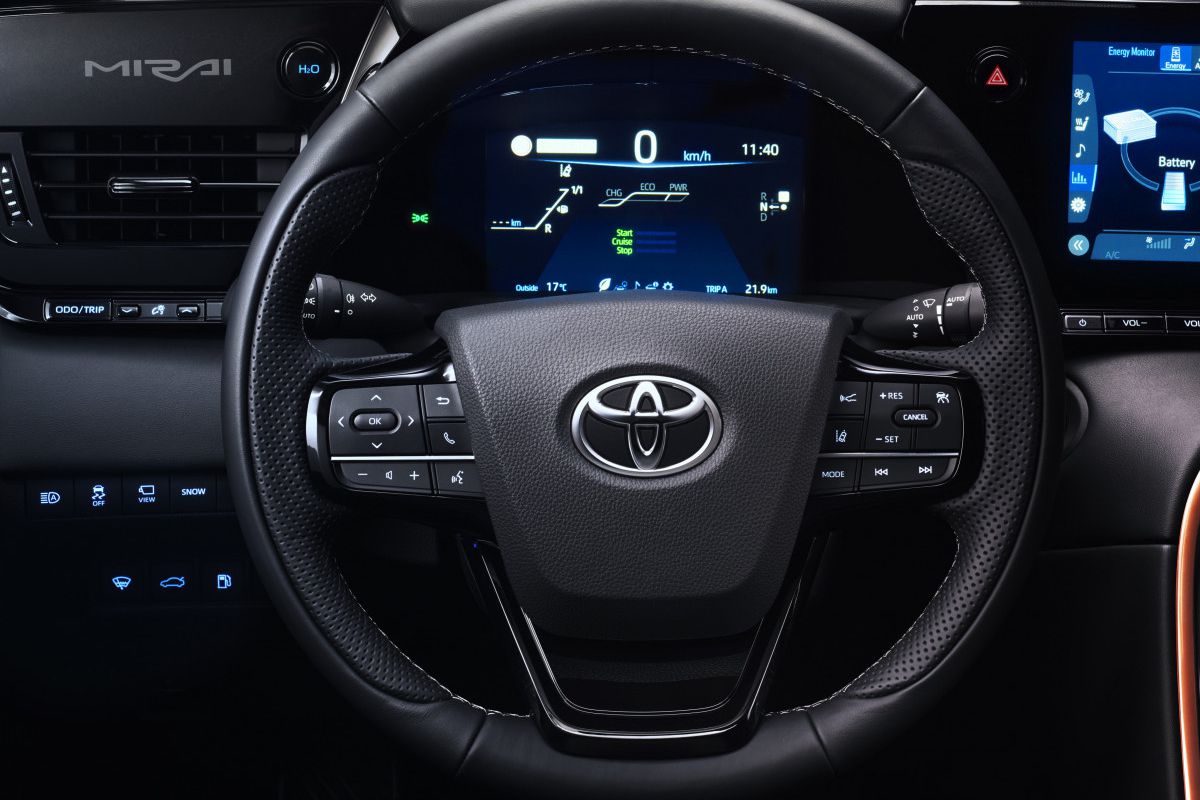
Never put yourself in a position where you'd have to bend over to reach for a call or device while driving. If you're considering a new vehicle, look for one that offers steering wheel controls for the CD player, radio, etc. If you're an incorrigible communications junkie – and there are a lot of us out there – you might consider keeping temptation out of sight (and out of mind). Put your cell phone, Treo, iPod, et. aletc.,. in your trunk, and use them to do what you have to do during stops.
3. Online and on-road don't mix:
It seems fairly obvious, but we'll say it anyway: Don't ever check or send email or surf the Internet while driving – period. Blackberries, laptops and navigation systems have all added dangerous multi-tasking to the driving experience, which completely takes the driver's eyes and attention off the road.
4. Don't fiddle on the fly:
If you have satellite radio (which features 100+ channels), set your favorite channels ahead of time. Fortunately, many navigation systems will only allow you to program destinations when the car is stopped, but if not you should make sure that you follow that policy anyway. Choose a navigation system with a user-friendly design that includes large buttons, simple and easily accessible controls, voice recognition, and clearly visible displays.
If you use an iPod (some of which now support 30,000 songs, intricate playlists, photos, and videos) be sure to program what you want to hear before you start driving, and only make changes when you stop or pull over. No matter how difficult it is to install an iPod in your vehicle, never , ever use headphones while driving – iIt's illegal and dangerous, because you won't be able to hear emergency vehicles. If you're having trouble finding or installing an effective iPod adaptor in your vehicle, visit the iPod center at Autobytel.com iPod Center for instructions and advice.
5. Take the Pledge at Autobytel.com:
Authorities are just beginning to study the effect of cutting-edge in-vehicle technology on driver distraction, accidents and fatalities – and while some states and cities have banned cell phone use while driving, further legislation is yet to come. But just because something isn't illegal yet doesn't mean it's not dangerous. Don't become a statistic that's later used to justify outlawing the use of in-vehicle technology while driving. Make a personal, predetermined decision to do the right thing NOW. If you want to put your commitment to drive safely and responsibly in writing, we encourage you to "Take the Pledge" today!
Gadget Safety Poll
Recently, California Governor Arnold Schwarzenegger breathed new life into stalled state legislation to ban cell phone use while driving, calling the practice "inexcusable" and "terrible." Well, according to a recent series of snap polls conducted as part of Autobytel's "Take the Pledge to Slow Down" safe driving campaign, those harsh words apply to the vast majority of American drivers.
In fact, 84% of drivers polled by Autobytel say they use their cell phones while driving – either occasionally (51%) or often (33%). To make matters worse, the majority (56%) say they primarily do so for merely "personal" reasons (i.e., to chat), while only 28% say they primarily talk and drive for emergency situations, and only 16% for business.
Despite the overwhelming popularity of driving and talking, 70% of poll-takers concede that they don't think it's safe, with 37% describing it as "not at all" safe and 33% saying it's "not very" safe. And nearly half (48%) agree with Governor Schwarzenegger that it should be outlawed, with only 37% saying that it should not and 15% remaining undecided.
But as political will builds to control this "old school" driver distraction, a new generation of technology gadgets – from Blackberries and iPods to hundred-channel satellite radio receivers – are making the distractions associated with cell phone conversations seem quaint. If driving while talking, even hands-free, is dangerous – and a new study finds that it's actually more dangerous than drunk driving – then just imagine how dangerous it is to type a text message with one hand on the wheel, or to find that one song among thousands on an iPod. If you're thinking that a sense of self-preservation keeps people from doing things like that, you're If you're thinking that nobody does crazy stuff like that, you're dead wrong. In fact, nearly 40% of the drivers polled by Autobytel say they've typed a text message while driving, 30% say they've driven while using their iPods with headphones … and an alarming 58% admit that they've taken both hands off the wheel because they were fiddling with high-tech gadgets. It should come as no surprise, then, that when asked to describe their experience with in-vehicle gadgets and driver safety, 88% described it as either a moderate or serious safety threat, with 40% characterizing today's tech-distracted drivers as "out of control."
Still not convinced? Just ask the 15% of all of the drivers polled who admit that they've actually caused or come close to causing an accident while distracted by technology.
Tips to Slow Down
Pay attention to the way people drive on your neighborhood streets. How does it make you feel when somebody zips by driving too fast, blasting loud music or hogging the road? Angry? Indignant? Outraged? Remember these feelings, and always drive like you would in your neighborhood!
By simply practicing these 'golden rules,' you will become a safer driver:
Organize a Rally
Autobytel wants YOU to spread the message of safe neighborhood driving by organizing a "Take the Pledge" rally in your community – and we're here to help, with tips, helpful hints and free, downloadable Pledge certificates and artwork.
Here are 7 tips for organizing a high-profile, well-attended and SUCCESSFUL Pledge event:
1. Build Local Community Leader Support:
Work to build a coalition of community leaders who can help raise awareness and support for your event. Police departments (and other branches of law enforcement), emergency response departments (fire, trauma centers, etc.), local school principals, neighborhood watch programs and PTA groups all have an interest in safe neighborhood driving, and are good places to start. Start doing this essential groundwork well in advance of the event, at least a month prior to the scheduled date.
2. Alert the Media!
I,
pledge to reconsider my DRIVING
HABITS, I pledge
to observe the SPEED LIMIT on each and every neighborhood street
as if
it were my
own; as if the people I love the most - my children, my spouse, my
friends - live there. I take
this PLEDGE because I know that by improving my driving
habits, I am making an
important contribution to the safety of my community and providing a
positive
example for other drivers.
Contact reporters and media members who, based on their past work, might be interested in a safe-driving rally. In cities, this might be a metro or calendar/event listing writer, or an editor of a neighborhood paper. If you live in a smaller town, you won't have as many outlets to choose from, but your story might be bigger news; in addition to your local paper, also contact the local TV/radio sources. When planning a date for your event, you'll have to balance public and media accessibility – newspapers and TV stations maintain smaller crews during weekends, which means less staff to divide among news events. Print media sources have longer scheduling windows than broadcast media. Contact newspapers and magazines at least a month before the event, and TV and radio stations a week prior. Finally, let our public relations department know about your event and contact us at publicrelations@autobytel.com if you have questions.
3. Location, Location, Location:
When selecting a location for your Pledge event, the primary considerations should be accessibility, visibility and, of course, safety (for participants as well as passersby). Beyond that, look for a location that works well symbolically. A local elementary school, for example, is a great symbolic venue, if it's something you can arrange with the principal, or perhaps an intersection notorious for speeding (or a recent speeding-related tragedy). Of course, any venue you select would either have to be a public or an authorized private space. In any case, try to get local police involved ahead of time, or at least give them a courteous "heads up."
4. Set the Mood:
Banners, signs and other colorful "eye-catchers" are more than mere window dressing; they can help motivate attendees, get attention, provide context for news photos and video – and help you make your statement. Signage should feature The Pledge program logo and mottos (i.e., "Slow Down," "Drive Like You Would In Your Neighborhood," etc.); and Autobytel is currently providing free downloadable artwork for signs, decals, or other materials you have ideas for on this website. Ideas include large-scale charts showing local traffic fatality and/or speeding statistics and an oversized Pledge certificate that local officials and citizens can sign. Click here to download a low resolution pdf version of the "Take the Pledge" sign.
5. Select Insightful, Effective Speakers:
At our Pledge events we have had speakers from the mayors' offices, city councilmen, state and federal highway safety and transportation officials, trauma doctors, and police and fire chiefs. Together, they make for an inspiring, well-rounded lineup. You should strive for the same – in other words, try to create a panel of experts with wide-ranging insights, stories and perspectives about the problems of speeding and unsafe neighborhood driving.
Don't be afraid to aim high when assembling your speakers. Consider contacting a representative from the Federal Highway Administration (FHA), as well as someone from the state department of transportation or your governor's highway safety representative – or even the governor him- or herself. On a local level, definitely contact the mayor, the chiefs of police and fire, and perhaps an American Trauma Society member or another trauma specialist. Anticipate what each speaker might add to the whole experience – e.g., a medic or bereaved parent sharing a personal story, for example, followed by a FHA representative crunching statistics, etc.
On the other hand, don't OVER-book speakers. Each should speak for a short period, with the entire event (including press questions) taking no more than 30 minutes. Solicit the presence of officials and other potential speakers by sending them invitations 2-3 weeks before the event requesting that they demonstrate their support for traffic safety by attending.
6. Spread the Word Online:
The internet represents an essentially cost-free resource to educate people about the Pledge and drive traffic to your event. Create a "group" email list that includes your official and community group contacts (including potential speakers), plus appropriate friends, family members and co-workers. Distribute strategic updates about your event to this group, and encourage them to forward your emails to people they know who might be interested in attending. Don't overwhelm your contacts with detail and lengthy prose –
just key information and developments: time, date, place, speakers, etc.
And if you're not up to hosting a live rally, you can still use the internet to spread the word. Just send a message about the Pledge to five people (or more) and ask each to tell five of their friends, and so on. The internet is an easy, fast, cost-free way to take the power of one and turn it into the power of millions.
No matter what shape your internet activism takes, be sure to paste in a link to the Pledge home page to help recipients learn more about the cause, and take the Pledge online.
7. Stock Up on Pledge Certificates:
Of course the ultimate goal of a "Take the Pledge" rally should be to encourage people to … Take the Pledge. So be sure to stock up on plenty of Pledge certificates – and be sure to let your email contacts know that they can take the Pledge online if they can't attend your event. Click here for a ready-to-print Pledge certificate file can be downloaded at our Download Artwork page.
Download artwork
Download Artwork to Make Your Own Slow Down Signs and Pledge Certificates!
How to Build a Sign:
1. Click here and save this file to a disk, or download the Pledge artwork to your system.
2. Take the disk, or email the artwork, to a local printer
3. Ask the printer to make signs (The Autobytel Take the Pledge signs are 18 x 24 inches, however, you may want a smaller or larger sign or banner. Your local printer may be able to provide you with more options).
4. Make sure to use a hard card stock and weather-proof paper
5. Hang the signs or staple them to a wooden or metal post – similar to real estate signs
6. Questions? Send us an e-mail.
How to Download a Print-Ready Pledge Certificate File:
1. Click here to download artwork for the "Take the Pledge" certificate.
2. Save the file to your system or a disk.
3. Print the certificate to a color copier if you have access to one, or send the artwork to a local printer
4. Ask the printer to print out as many certificates as you anticipate needing.
5. *OR you could simply print a single color certificate and make copies.
Get a "FREE" Sign From Autobytel (all you pay is shipping and handling):
You can also request a FREE pre-printed sign from Autobytel. Please print out our order form, and send it along with a check made payable to Autobytel Inc. in the amount of $7 to cover shipping and handling. Click here for our order form and for pricing information.
Send a check and order form to:
Autobytel Inc.
Attention: Crystal Hartwell (Take the Pledge Sign Order)
18872 MacArthur Blvd.
Irvine, CA 92612
(949) 225-4500
The first sign is free (all you pay is $7 for shipping and handling), and each additional sign costs $8 each plus $7 shipping and handling. Please make sure to include the address where you would like your sign shipped. Unfortunately, we are unable to accept credit cards. See order form for more details. Our pre-printed signs measure 24 x 18 inches, and are made of corrugated plastic. See the photo on the order form to view a representation of the Slow Down sign.
Take the Pledge!
beginning
this day, this hour; and to re-evaluate my "need" to race from place
to place.